Tag: TN Temples

  • Thanjavur Vadavaru Sri Ragavendra Brindhavanam

    Generally, there is Koorma peeta for Ragavendra Brindavanams everywhere. But there is an exception which we can see only in Thanjavur Brindavanam. There is a “Sarpa-Peeta Brindavana” of Sri Raghavendra Swamy, situated on the banks of Vadavaru (ancillary of River Cauveri) 5kms away from Thanjavur in a place called Kalimedu. This Brindavana was consecrated during the rule of last Nayaka Dynasty King of Thanjavur, Vijayaraghava Nayaka (son of Raghunatha Nayaka), just before the start of Maratha rule. This is the place where Sri Ragavendra performed 12 years of deep penance after sanyasa sweekara.
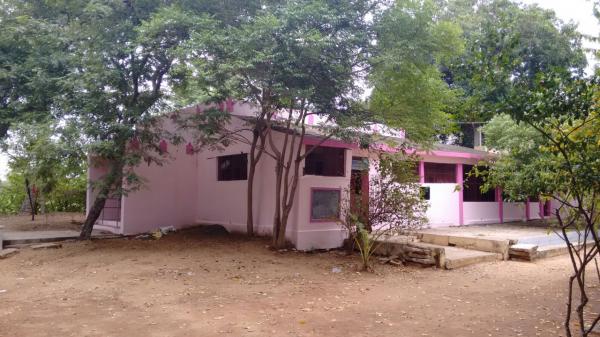
    Sri Ragavendra Swamigal born as “Sri Venkatanatha” nearly 400 years ago, at Bhuvanagiri near Chidambaram and become a scholar of music and Vedas at Kumbakonam. His sanyasa ordination took place at Vadavaru River bank of Thanjavur in 1621 AD, in the presence of King Raghunatha Nayaka and from then on, he is known as “Shri Raghavendra Theertha”. He did Thapas for 12 years, where this Brindavana is located. To spread the benefit of his Thapas, his divine grace and blessings, he travelled around the Country.
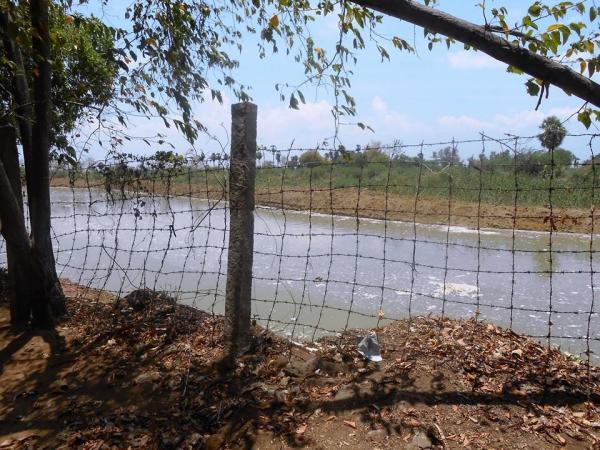
    Soon after he left Thanjavur, the king faced hard times. On hearing his request, Shri Raghavendra blessed him by guiding him to construct a Brindavanam at the place where he did Thapas. Sri Ragavendra Swamigal told that, he will live there with “SUKSHMA SHAREERA” (astral form) and bless all. Shri Raghavendra himself appeared in the form of a Five Headed Serpent and helped to identify the place to build the Brindavana. As directed by Sri Raghavendra Swamy, the construction had been done. Since Shri Raghavendra Swamy said that he resides in this Brindavana, Mruthika Prathishta (the holy sand consecration) is not done here. The Serpent which helped in identifying the place had become a stone sculpture and it’s still in the bottom of this Brindavana. It was the place where the title of “Sri Ragavendra Theertha” was given to him by his Guru Sri Sudheendhra Theertha and handed over the responsibilities of the Vidya Math.
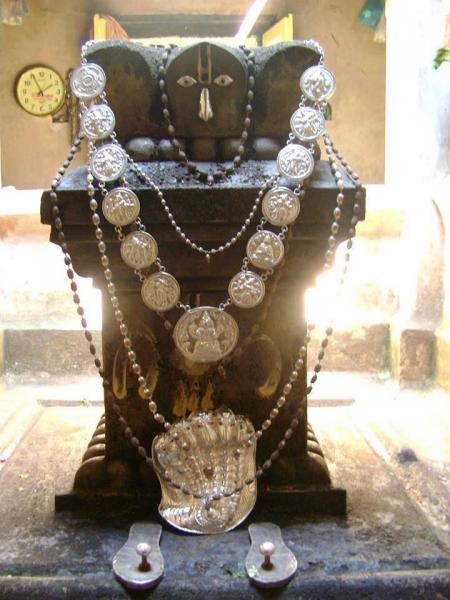
    It is considered that he is still doing his thapas here and hence Sanyasa pooja Kramas are only followed. So, the Brindavana is never touched after the pooja timings. The roof top of Brindavana is kept open and Raghavendra Swamy is experiencing all the natural phenomenons such as scorching Sun, rain, storm and dew as he faced them during his Thapas.
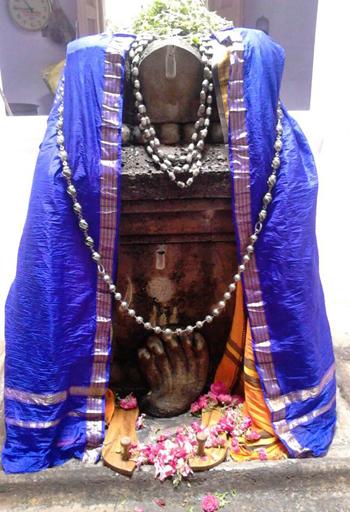
    This Brindavana is not crowded as it is very lesser known among the devotees. The beauty of nature, sound of the river water adds to the divine feeling. Devotees who meditate at this holy place can feel the divine blessings of Guru Ragavendra.
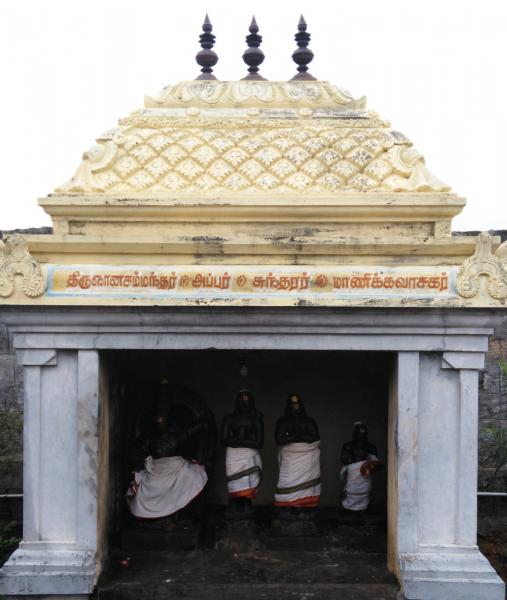
  • Nelvennai Swarnakadeswarar Temple

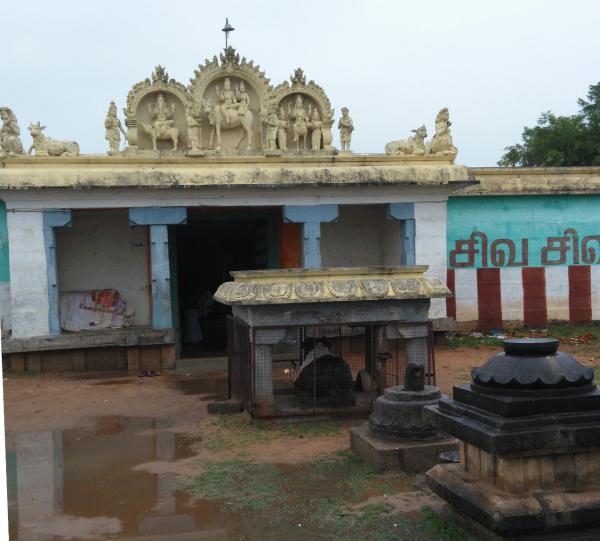
    The small but divine temple of Lord Shiva called as Swarnakadeswarar (Porkudam Koduthu Aruliya Nayagar) is located in Nelvennai village 15 kms from Ulundurpet. This is one of the ancient temples of the erstwhile Thirumunaippadi Nadu. There are stone inscriptions in this temple dating back to the period of the Chola King Kulothungan-I. The lord’s name is inscribed as “Sri Porkudam Kodutharuliya Nayanar” meaning “the lord who gifted a pot full of gold”.

    Main deity of the temple is called Sri Swarnakadeswarar – Sri Vennai Appar – Sri Porkudam Koduthu Aruliya Nayanaar and his consort Parvathi is called Sri Neelamalarkkanni – Sri Brakannayaki. The legend is that, once this place was very fertile with paddy fields yielding plentiful harvest. The people were happy and prosperous which made them forget Lord Shiva. Angered by this, the lord directed Varuna, the God of rain, to cause a downpour in the region. Due to continuous rains, the lakes, tanks and all other water bodies began to flood. Fearing for their safety, people ran to the lord to seek his intervention.

    Lord Shiva came there disguised as a youth and asked them to bring all the paddy bags from their homes. He built a dam with paddy bags to prevent further calamity. Though the people lost all their possessions, they praised the youth as their saviour. He said that God was the giver of prosperity and they should not be ungrateful to him. The young man informed the people that there was a pot of gold (Por Kudam) in the well and they can take it to recover the loss of their harvest. Thereafter the young man disappeared and, in his place, Lord Shiva appeared as a Swaymabu lingam. There is no temple tank and well water is the Theertham here.

    As the lord is believed to have gifted a pot of gold (Swarna in Tamil), he is also praised as Swarnakadeswarar. Since Lord Shiva himself helped to build a dam (Anai in Tamil) with paddy (Nel in Tamil), the place was named Nel Anai which later changed to Nelvennai or Neivanai.

    Another legend associated with this temple is that of Saint Gnanasambanthar. During his pilgrimage, he reached this place late in the evening and was having trouble finding the temple. The Lord sent Goddess Parvathi to guide Sambanthar to the temple. Overjoyed that the Goddess herself had come to take him to the temple, Sambanthar danced and sang the praise of Lord Shiva. A beautiful idol of Gnanasambanthar in dancing form can be seen here.

    It is believed that every year, Suryan (Sun) worships Lord Shiva in the early morning of Maha Shivarathri day by touching the feet of the Lingam in the sanctum. The wonder is that, on this occasion, the lingam appears in four different colours – blue, green, white and red.

    Lord Mahavishnu graces from a separate shrine in the corridor with Goddess Mahalakshmi on his lap as Lord Lakshmi Narayanar. Lord Shiva’s procession deity is in the Arthanareeswara form. He is depicted in a standing form with a trident on his back. This symbolizes the oneness of Shiva and Shakti. In his hymn of this temple, Saint Thirugnanasambanthar mentioned that “My lord resides in this fabled land of Nelvennai. Worshipping him is the duty of the righteous”.

    Special pujas are offered to Lord Bhairavar on new moon days (Pournami). Devotees believe that performing poojas by applying white butter on the lingam (Vennaikappu) will remove obstacles from marriage proposals, help them get better job opportunities and relieve them from their debts.


  • Pillayarpatti Vinayagar Temple

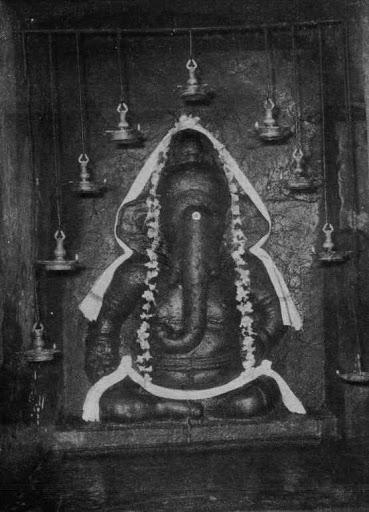
    Pillayarpatti Karpaga Vinayagar Temple is one of the ancient rock-cut cave temples in Tamilnadu. Located in between Sivagangai and Karaikudi in Sivagangai district, this is the most famous Vinayagar temple in South India. This village derives its name from the image of Lord Pillayar (Ganesha), known as Karpaga Vinayaka (Karpagam is a tree which grants all our wishes). The Lord is seated and appears with only two arms, the left being on the hip and right holding a Modhaka (‘Kozhukattai’ – the favourite dish of Lord Ganesha). The trunk is turned to the right. There is no sacred thread (Poonul) on this Ganesha sculpture.


    The trunk of Vinayagar in this temple is curled towards his right in the Valampuri mode. This 6-foot-tall mammoth image of Ganesha is a bas relief in an excavated cave, off of a hill in the precincts of the temple. Tiruveesar is a Shiva Lingam carved in a similar manner in this temple. Other deities in the temple include Marudankudi Eesar (Lord who lives under Marudham tree) and his consort Vaadaamalar Mangai. Marudham tree is the sthala vriksham of this temple.

    The temple has several inscriptions within the rock-cut shrines, as well as on the walls and mandapam outside. One of them helps to date the core layer of this temple to the 7th-century. Another notable inscription in the sanctum is more archaic, sharing paleographic features of Tamil Brahmi and early Vatteluttu. This has led to proposals that portions of this Vinayagar temple are likely older by a few centuries. The temple walls and mandapams have additional stone inscriptions from the 11th to 13th-century. In late 19th-century, during restorative excavation and repair work, panchaloga statues were discovered. These are dated to the 11th-century.


    The temple in its contemporary form has many layers of additions and restorations completed over nearly 1,400 years. The earliest layer that can be dated with certainty is the 7th-century rock-cut cave temple. This rock-cut cave is attributed to Narasimhavarma, (650 CE). Several rock-cut Hindu gods and goddesses are displayed in this earliest layer. The cave also includes inscriptions and unusual iconography.


    Interestingly, between the rock-cut Ganesha and the rock-cut Shiva shrine is another unusual bas-relief sculpture of a standing royal human form with two attendants. This has been variously interpreted as Ardhanarishwara (half Shiva, half Parvati) or Harihara (half Shiva, half Vishnu) or a king between two officials (King who constructed the temple). The difficulty and complexity with these interpretations is its simplicity, lack of classic emblems (icons), and the presence of certain icons. Researches are still going on to find out who is depicted in that bas-relief.

    The sculpture of Pasupatheeswarar with a cow worshipping Lord Siva by offering his milk is one of the special feature of this temple. Kubheran (God of Wealth) had worshipped at this temple. Also adding to the sanctity, Goddesses Laxmi, Saraswathi and Durgai are found together at the same sanctum. Unlike other places the three Lingams Thiruveesar, Marudheesar and Senchadeswarar and the three Goddess Sivagami amman, Vaadamalar Mangaiamman and Soundara Nayagi amman all appear together at the same place and bless the devotees.

    It is believed that by worshipping Kathyayini Amman at this temple, women get relived from sevvai dosham which prevent them from getting married. "Sabda Madhar" whom importance due to changing time are provided with a seperate sannidhi known as Sakthi sannidhi at this temple.


  • Namakkal Bhaktha Anjaneya Temple

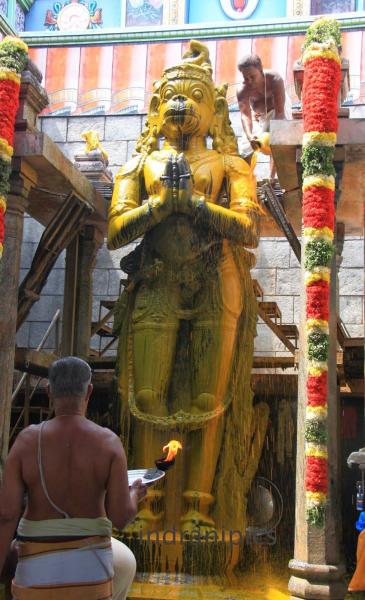
    Namakkal Anjaneyar temple is located in Namakkal town and is constructed in the dravidian style of architecture. The legend of the temple is associated with Lord Narasimha, an avatar of Lord Vishnu appearing for Hanuman and Lakshmi. The idol of Anjaneyar is 18 ft tall, making it one of the tallest idols of Hanuman in India. The idol is carved out of a single stone and believed to be existing from the 5th century. The Agamam (rules for performing pooja) followed in this temple is "Sri Vaikhanasam".

    Legend of this temple says, while Sri Anjaneya was bathing in the holy river Kandaki in Nepal, he got a sacred Saligrama stone. As the stone was in the shape of Lord Vishnu, Anjaneya was carrying it through the sky through this place. He had to take bath, but could not as the Saligrama should not be placed on earth. He then found Goddess Mahalakshmi doing penance in this place. Mother told Anjaneya that she wanted to see Lord in the form of Narasimha and hence doing penance. Anjaneya requested mother to hold the Saligrama till he returns after bath. The mother Mahalakshmi agreed on a condition that he should return on time, but Anjaneya could not complete it. So, she placed the Saligrama on the ground and it grew into a mountain. Lord Narasimha appeared before Mahalakshmi and stayed here as Lakshmi Narasimha. Anjaneya also stayed here itself then.

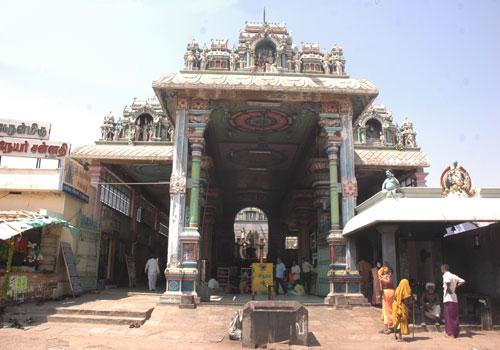
    The temple is located on the foot of Namakkal hill on the road from Namakkal to Salem. The temple has a flat gateway tower with a pillared hall leading to the Sannidhi which houses the image of 18 ft Anjaneyar axially facing the Narasimha shrine in the foothills, 430 ft away. There is no roof over the sanctum and Anjaneyar has a unique iconography sporting a sword in his waist and holding a garland made of Saligram.

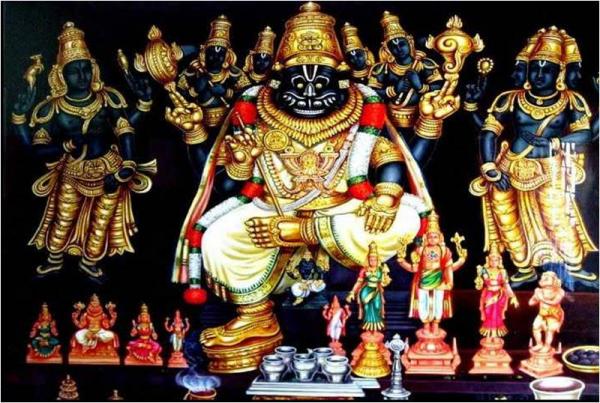
    The speciality of Lord Narasimha here is, the idol has sharp nails used to kill demon Hiranyakasibu and there are blood stains in the palm of Lord. There is Sun, Moon, Brahma, Sanathanar, Janaka around him. As the Lord is Kudavarai Moorthy, there is no Thirumanjanam (Abishekam) for him. It is performed to the Urchavar only. Generally, Mother Lakshmi is seen sitting on the lap of Sri Lakshmi Narasimha. Here Mahalakshmi has a place on the chest of the Lord. Sri Namagiri Thayar (Mahalakshmi) has a separate shrine facing east here. Those who wishes to become a mathematics pundit comes here to worship Goddess Namagiri Thayar.

    The paintings of Sri Ashtapura Narasimhar, Vaikunda Perumal, Sri Varahar and Ulagalandha Perumal (Lord who measured three worlds in three steps) are the ones which devotees should not miss to see here. The major festival of the temple is the fifteen-day Panguni Uthiram festival celebrated during the Tamil month of Panguni (March – April) when the image of presiding deities are taken around the streets of the temple. Devotees pray Lord Anjaneya here for academic success, child boon and successful marriage life.

  • Mannarkudi Rajagopalaswamy Temple

    Rajagopalaswamy Temple in Mannargudi town near Thanjavur, is one of the most ancient and important Lord Krishna temples in the country. It is also called ‘Dakshina Dwaraka’. The ancient town of Mannargudi was just an Agraharam until the entry of Thanjavur Nayaks in the 16th century. The beautiful Agraharam derived its name from Mannarkovil or Rajamannarkovil. In Tamil Vaishnavaite literature, Mannar means 'Lord Vishnu' and Kovil means 'the abode of Vishnu'. Initially, Mannargudi was bordered by the tall compound walls of Rajagopalaswamy temple. It became popular only when Thanjavur Nayaks made it their capital and Rajagopalaswamy Temple became the centre of attraction.

    The legend behind the temple says that, Sages Gopila and Gopralaya underwent severe penance praying to Sriman Narayana. Lord was pleased at the devotion of his devotees and instructed them to visit Dwaraka to attain the blessings of Lord Krishna. Sage Gopila and Gopralaya went to Dwaraka and when they arrived at Dwaraka, the Krishnavathar of Lord Vishnu was over. Sages were disappointed and very much disheartened. Narada maharishi advised the sages to go to Mannarkudi and do penance to have Krishna Darisanam. Sages arrived in this sacred land and continued to follow severe penances and they prayed to Sriman Naryana. The Lord was pleased at their devotion and once again revealed Krishnavathar and showed them the form of all 32 Leelas he did in Dwaraka. As requested by the sages Lord stayed at this place as Rajagopalan and Vaasudevan. According to scriptures of Mahabharatha, Sage Pulastya describes the grandeur of this temple to Pithamahar Bheeshmar that whoever stays overnight in this sacred place would achieve the merit of a 1000 Godhanam (donating 1000 cows).

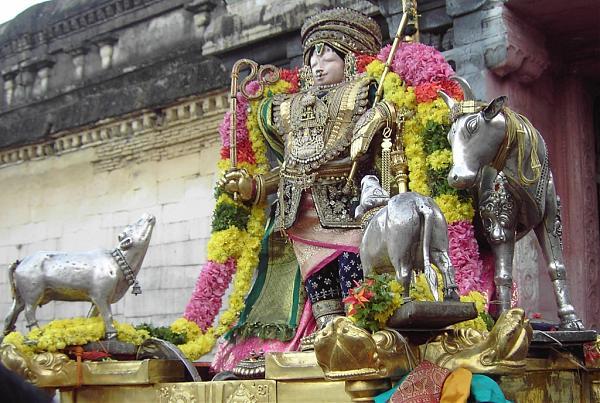
    Mannarkudi Rajagopalaswamy temple is spread over an area of 33 acres. Lord Krishna appears as a shepherd boy with a whip on hand and a turban on his head. He has butter on the right hand and adorned with jewels worn by children with bangles in hand. There is a cow and two calves by his side. Moolavar is called Vaasudeva Perumal and Urchavar is called Rajagopalaswamy. Thayar is called Sengamala Thayar. There are 9 tanks (Theertha Kulam) inside this temple complex.

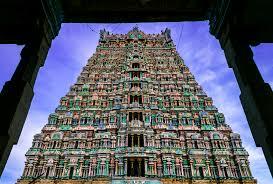
    This is one of the oldest temples in Kaveri Delta region, built in the year 1072-1150 AD by the King Kulothunga Chola I and II of Chola Dynasty. This grand temple occupies 33 acres of land with a majestic Rajagopuram of 154ft height and it has 7 Praharas, 16 temple Towers, 18 Vimanams and also enshrines of 24 Gods and Goddess. In this temple the 1000 pillar mandapam and the magnificent wall encircled the temple are built by the King Vijayaraghava Nayak. He also erected the big Raja Gopuram in the temple so that he can view the Srirangam Ranganathaswamy temple from the top of it. The Nayaks were especially interested in music and it was promoted in the temples. Instruments like Mukhavina, Dande, Kombu, Chandravalaya, Bheri and Nadhaswaram were commonly used in the temple service.

    The 18-day Panguni Brahmotsavam celebrated during March-April every year is very among Vaishnavites al over the world. It is said that Rajagoplaswamy temple has not been glorified by Azhwars. But there are evidences that Thirumangai Azhwar set up a Kodi Maram (flag post) outside the temple with the help of cotton bales. Also, various Azhwars have visited the temple. Unfortunately the ancient scriptures of Divya Prabandhams have not been discovered like many lost Tevaram songs.

  • Thiruindaloor Parimala Ranganathar Temple

    Parimala Ranganathar Perumal Temple or Tiruindaloor is dedicated to Lord Vishnu, located in Thiruvilandur of Mayiladuthurai district. It is one of the Divya Desams, the 108 holy temples of Vishnu revered in Nalayira Divya Prabandham by the Alwars (the 12 poet saints). This temple is in the banks of river Kaveri and is one of the Pancharanga Kshetrams and is called as Andya Rangam (Last Arangam). Srirangam is the first Rangam.

    It is believed that River Kaveri is given the holy status of Ganga in this Kshethram. She is being taken by God as bed in Srirangam, as mother in Thirusheri and above his head in this Parimala Ranganathar temple, like River Ganga occupies the head of Lord Shiva. Parimala Ranganathar is believed to have appeared for Chandra, the moon god. This is how the place got the name Thiruindaloor (Indu Means Moon). This place is where moon god Chandra is believed to have been relieved of his curse. Chandra worshiped Vishnu who appeared to please the devotee.

    According to another legend, the azhwar saint Thirumangai Azhwar visited the temple and the doors were locked at the time. Lord Parimala Rangan Shut the door on Azhwar reasoning that he was late. Upset at this Azhwar argues vehemently with Lord. Still Parimala Ranganathar refused to open the door. Frustrated and dejected by this, Azhwar decided to leave the place saying “வாசி வல்லீர் இந்தளூரீர் வாழ்ந்தே போம்நீரே”, meaning “I am leaving. You live yourself here and enjoy life”. After this heated argument Lord Parimala Rangan praised and persuaded Thirumangai Azhwar to sing. After hearing the beautiful Tamil of Azhwar, Lord opened the door and gave Darshan. 10 Pasurams were sung by Thirumangai Azhwar on Parimala Rangan.

    Thayar of this temple is called Parimala Ranganayaki. The temple follows Pancharatra Agama and thenkalai tradition. The major festival celebrated in the Parimala Ranganathar Temple is the Chithrai festival, celebrated during the Tamil month of Chittirai (April-May). The other festivals in the temple include the 10-day Aaandal Aadi festival celebrated during July-August, Thayar Navaratri Utsavam during the Tamil month of Purattasi (September – October). Like many temples in the Kaveri Delta region, Kadaimuka Snanam or Mudavan Muzhukku is also celebrated in this temple during the tamil month Aippasi, when the river Kaveri joins the sea. Thousands of people will gather on that day to take holy bath in the river.


  • Sri Ranganathaswamy Temple, Srirangam

    Dedicated to Lord Vishnu, the ‘Ranganathaswamy Temple’ located on the Srirangam Island of the Tiruchirapalli city in Tamilnadu, is another masterpiece of the Dravidian architecture. Spread across an area of over 150 acres, the temple has 49 sub-shrines and is dotted with 21 brilliantly carved Gopurams with the ‘Raja Gopuram’ standing tall at 236 ft. making it the tallest in Asia. This temple is the biggest functioning Hindu temple in the world.

    A part of the temple is actually dedicated to temple activities whereas the remaining portion serves as a township for people, therefore making this temple one of a kind. This is the first amongst the 108 ‘Divya Desams’.

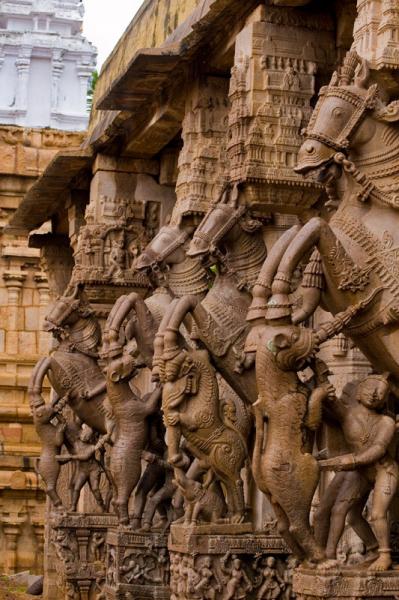
    While the exact date of temple’s consecration is still not known, according to archaeological records, the original structure of the temple dates back to 10th century when the region was under the rule of Chola dynasty. In the 14th century, the temple was plundered of its wealth by invaders and was again restored to its original grandeur by the Vijayanagara and Nayaka rulers in late 16th century. The magnificent thousand-pillared hall can leave anyone awed with its artistic brilliance; the exquisitely carved figures of horses standing on their rear legs depicting war scenes on the base of these pillars offer a true spectacle.


    This temple lies on an island formed by the twin Rivers Cauvery and Kollidam. The temple is also known by other names such as Thiruvaranga Tirupati, Periyakoil, Bhoologa Vaikundam and Bhogamandabam.

    Over the years, the temple has been invaded several times, but the legend of Vellayi is prominent even today. It goes like this:

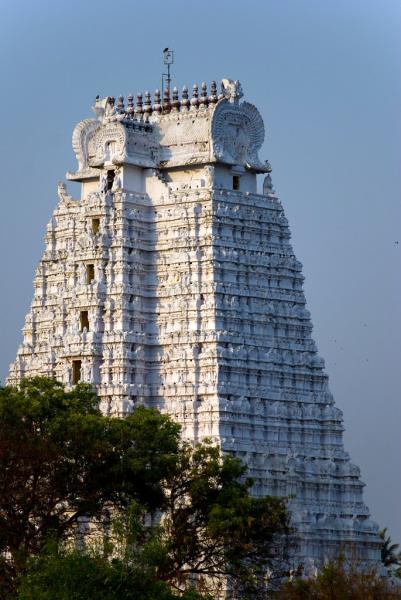
    On the eastern entrance of the Srirangam temple, there stands a white tower, popularly known as the Vellayi Gopuram. Residents of Srirangam call this east tower as the Vellai Gopuram. It has been painted white by the temple authorities. The tower has actually been named after a Devadasi called Vellayi who had sacrificed her life to protect the idol of Namperumal from the Sultanate forces who had invaded the temple.

    Srirangam was attacked by the Sultanate forces in the year 1323 during the Tamil month of Vaikasi. Nearly, 12,000 residents of Srirangam island had laid down their lives fighting to protect the temple. The forces attacked the temple and Lord Ranganatha's jewels and the temple gold were taken away.

    The forces also wanted to seize the idol of Namperumal, which they believed was made of pure ‘Abaranji' gold. They searched for the idol but the Vaishnavite Acharya, Pillailokacharya had taken the idol away and fled to Madurai. The idol of Namperumal that left Srirangam in 1323 returned back only in 1371.

    Unable to locate the idol, the Sultanate forces killed the temple authorities and later launched a massive hunt for Pillailokacharya and Namperumal.


    Fearing that the forces would capture the Acharya and the idol, Vellayi, performed a dance before the commander of the forces thus gaining time for Pillailokacharya to escape with the idol.

    Her dance lasted for hours together and finally she took the commander to the eastern gopuram and pushed him down. After killing him, Vellayi jumped to her death from the tower chanting the name of Ranganathar.

    Hailing Vellayi's sacrifice, the chief of Vijayanagara forces, Kempanna, who drove away the Sultanate forces, named the tower after her. The gopuram continues to be painted white in her memory.

  • Uma Maheswarar temple, Konerirajapuram

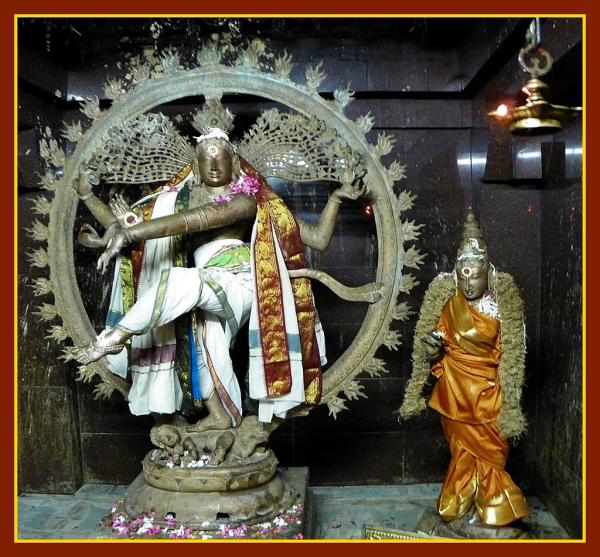
    Uma Maheswarar Temple of Konerirajapuram near Kumbakonam in the Nagapattinam district of Tamil Nadu is very famous for the unique Swayambu metal Lord Natarajar – the biggest Nataraja statue in the world.

    The historical name of this place is Thiru Nallam. It is believed that this place got submerged and later excavated. Queen Sembian Mahadevi, wife of Chola King Kandarathithan and the Grandmother of king Raja Raja Chola, replaced the old brick temple with granite and expanded the premises.

    Shiva is worshiped as Uma Maheswarar and is represented by the lingam and his consort Parvati is depicted as Mattuvar Kuzhalammai. The presiding deity is revered in the Devaram, written by Tamil saint poets nayanmars – Sampanthar and Thirunavukkarasar – and is therefore a Paadal Petra Sthalam. 16 among 18 Sidhdhars have prayed at this temple. 

    The presiding deity is Shiva. The goddess is Angavala Nayaki. There are also shrines to Brahma and Vishnu within the complex. There are also shrines for Ganesha and Murugan as Vaidhyanathaswami.


    Nataraja of this temple is world’s biggest and tallest Nataraja sculpture in panchaloha (amalgam of five metals). This is the only temple in the world which has swayambu Nataraja which is said as "Theenda Thirumeni" meaning- sculpture not even touched by a sculptor. 

    Legend behind this swayambhu goes like this: when King wanted to install a tall Panchaloha Natarajar idol, he asked his court sthapathi to make one to the size of a tall human being. Being a staunch devotee of Lord Siva, sthapathi was enthralled to make one and he prepared moulds, but he could not succeed. When he was busy preparing a huge mould, a couple appeared before him, from nowhere and asked for some water. Since sthapathi was dejected and worried about his work, he yelled at them to drink molten panchaloka metal kept in the vessel. The couple drank that and to the surprise of the sthapathi, they turned out to be Lord Nataraja in dancing form and Parvarthi Devi next to him.

    When king came to inspect the work, sthapathi narrated whole thing happened just then. But king did not believe, and he furiously drew his sword. The sword left a cut mark in Dancing Nataraja’s left leg and blood oozed out and splashed on the king. King immediately developed leprosy and he prayed to Lord to forgive him for his mistake. Lord Siva appeared and told the king to pray to Lord Vaithiyanatha Swami who is going to stay in that Temple and bless all his devotees to ward of all health problems. Here in this temple Vaithiyanatha Swami is very powerful and devotees throng this temple on Tuesdays to offer prayer and poojas.

    This Lord Nataraja is seen like a human, with mole in His left armpit and the sword cut mark in his lifted left leg which looks very natural like human body. This is an antique wonder.

  • Thiruvarur Thiyagarajar Temple

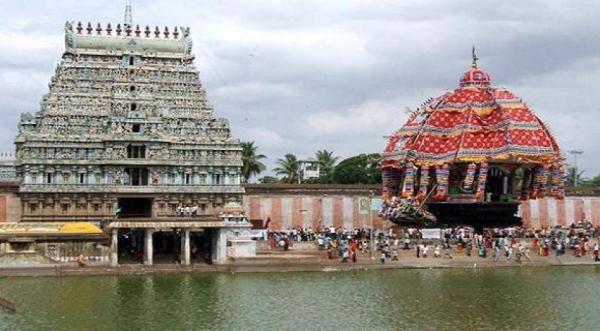
    Thyagarajaswamy temple, is one of the most important Shaiva temples in the entire country. It occupies an area of around 20 acres. The temple tank Kamalalayam ( lotus tank) is one of the largest in the country with an area of around 33 acres. The temple car, the world famous 'Thiruvarur Ther' is the largest in the country weighing around 300 tons with a height of 96 feet. The size and importance of this temple could be gauged by the fact that there are 9 Rajagopurams, more than 100 shrines, 86 Ganeshas, 24 sub-temples, 3 big prakarams, 80 vimanams, 13 big mandapams, 3 gardens, 15 wells (theerthams), 365 Lingams to denote the number of days in a year, etc. It is difficult to cover and have a detailed look of this temple within a day.

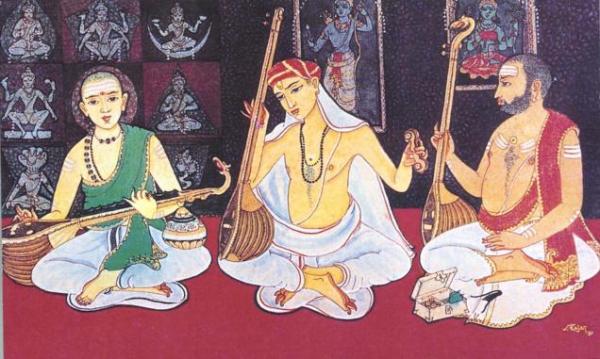
    Thiruvarur is also the most important among 274 Padal petra sthalams in Shaivism, having thevarams sung by all the 4 leading Nayanmars-Appar, Sundarar, Sambandar and Mancikavasagar. This temple holds the record for the maximum number of Thevaram songs – 353. It was also the birth place of the Trinity of Carnatic Music-Shri Thyagaraja Swamigal, Muthuswamy Deekshitar and Shyama Sastry.

    There are two main lingams – Vanmikanathar and Thyagarajar. The former is originally from ant hills and is believed to be the Adi Lingam of this Kshetram. Now there is a small maragatha lingam made of emerald for which Poojas are offered at fixed hours- 8.30am, 11 am and 7 PM- and then kept in a silver box and this is kept on the right side of the Thyagesar Lingam.

    The Thyagarajar is in the Somaskanda roopa – Swamy and Ambal with Subramanya in the middle – and the temple is named after him. The idol is so beautiful both in front and back that there is a saying in Tamil “ Munnilum Mummadanku Pinnazhagar" meaning, back thrice beautiful than the front. However this practice of calling Him Thyagaraja commenced only from 16th century. Earlier He was either known as Veedhi Vidankar or Aarurapati. This Lord is always believed to be doing the iconic rhythmic dance called Ajaba Nadanam. The feet of the Thyagaraja Murthy could be seen only twice an year- left leg on the Panguni Uthiram day and right leg on the Arudra Darsanam-Thiruvathirai day. Rest of the time, They are covered with flowers.

    In all the Shiva temples, after Thevaram is recited, they end with the utterance of the word “Thiruchitrambalam”, to denote that this ends with the Lord at Chidambaram. This is the only Shiva temple where Thiruchitrambalam is not uttered at the end of recitation of Thevarams as this temple is considered ancient even compared to Chidambaram. In fact, the date of establishment of this temple is not known. Even Sambandar had asked the same question in 10 thevarams.

    Like Chidambara Rahasyam, there is Tiruvarur Rahasyam, believed to be enshrined behind the Thyagarajar shrine. In all the Shiva temples, Pradosha Pooja is performed once in a fortnight. This is the only temple where Pradosha Pooja is performed between 4.30 and 6 pm every day.

    There are two Ambals in this temple, Kamalambal and Neelothpalambal. The latter is believed to be the Adi Parasakthi avatar and is having only two hands. Though the normal belief is that as the temple tank was full of Lotus it came to be called Kamalalayam and the Mother Kamalamba! The other explanation is that She combines the features of the Tri-Devis- Ka for Kalaimagal (Saraswathi), Ma for Malaimagal (Parvathi) and La for Alaimagal (Lakshmi). Kamalambal also has the half-moon on her head which we normally see only in Shiva. She poses with the right hand holding a lotus and the left hand resting on Her hip with the Yoga posture.

    Neelothpalambal is having a shrine in Thyagarajar temple. Here there is a maid standing by the side of the Mother, holding Murugan. Ambal keeps one hand on Her Son’s head, as if patting with motherly affection.

    In almost all the temples, Nandi is seen in sitting position. This is one of the rare temples, where he is in standing position. This is the case with all the 7 Sapthavidanga Kshetrams and all these Nandis are made of metal and not stone.

    Those who have the Mukha (face) darshan of the Lord at this temple, should also visit Vilamal temple situated around 3 Kms from here, to have Paada (Foot) darshan.

    Tiruvarur is one of the Mukthi kshetrams. As per local belief, those who are born in this place, are relieved of the burden of re-birth.

    There is a Lingam installed in this temple by Rajaraja Chozhan I. The peculiarity of this Lingam is that its shadow can be seen only in the eastern direction. There is also a local belief that this shadow cannot be seen by a person who is likely to live for less than six months.

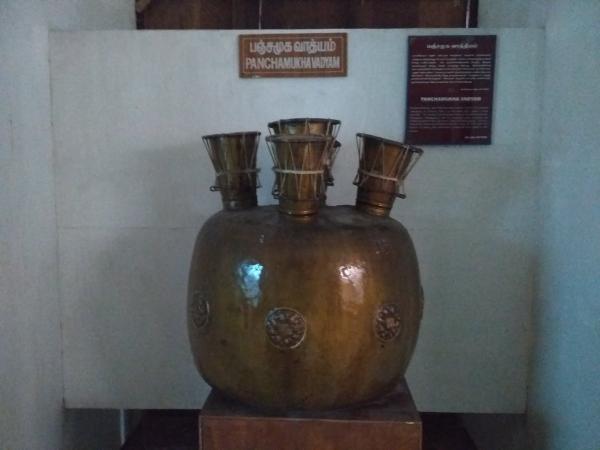
    There is a five faced percussion musical instrument called Pancha Mukha Vadhyam which is not seen in any other temple. It is believed that Nandi played this for Shiva Tandavam. This is played in all the poojas in this temple. In addition, there are two more musical instruments- Paarinayanam and Suddha Mathalam- played only in this temple.

  • Thiruvaiyaru temple

    Aiyarappar temple also known as Panchanadeeswarar temple is a unique temple surrounded by five rivers. Lord Shiva here is called Aiyarappar, meaning Lord of the five rivers. The Five Rivers are Arisilaaru, Vennaaru, Vettaaru, Kudamuruttiyaaru and Kaaviriyaaru. The goddess here is known as Dharmasamvardhini.

    There are several inscriptions in the temple that affiliates it to the Cholas, Pandyas and other rulers. Karikala Chola, Rajaraja the great, Jatavarman Sundara Pandyan and Krishna Devarayar are associated with Thiruvaiyaru. The temple has two distinct divisions called ‘Uttarakailasam’ and ‘Dakshinakailasam’. Uttarakailasam was built by Rajaraja Cholan’s queen in the late 10th century who also made several endowments . Dakshinakailasam was renovated by Rajendra Cholan’s queen.

    Appar, one of the important Nayanmar, was blessed with Thiru Kayilaya Dharisanam in this very temple. Therefore, the saint was closely associated with this shrine and dedicated songs in ‘Thevaram’ to this temple. Thereby, making this temple one of the paadal petra sthalam.

    Thiruvaiyaru is more renowned for its association with Saint Thyagaraja, who, along with Muthuswami Dikshitar and Shyama Sastri, comprised the Trinity of Carnatic music.

    Lord Shiva in the temple is a swayambumurthi. Thiruvaiyaru is considered as holy as Varanasi and is therefore called Dakshina Varanasi. Bathing in the Cauvery here is believed to rid devotees of sins like bathing in the Ganges.

    Legend says this is the place where Lord Panchanatheeswara of Thiruvaiyaru planned the marriage between Nandhi devar and Swayasambihai in this place and conducted the ceremony in an auspicious place nearby on the Punarpoosa day of the tamil month Panguni. In a gesture to celebrate the same, the saptha sthana festival is conducted every year in the month of april.