Tag: Temples of Tamil Nadu

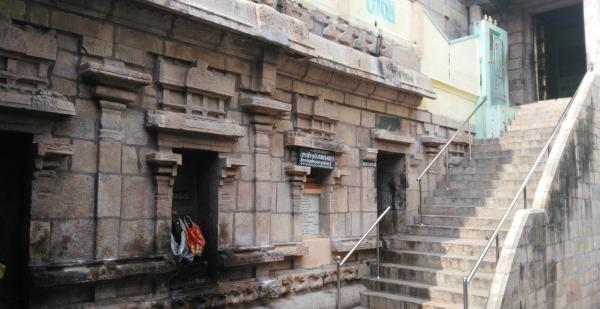
  • Nallur Kalyana Sundareswarar Temple

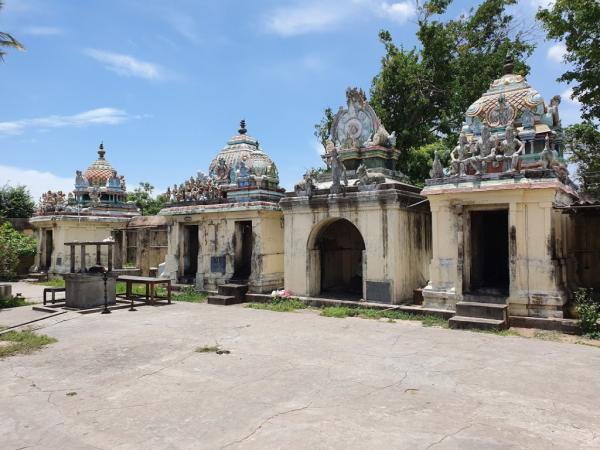
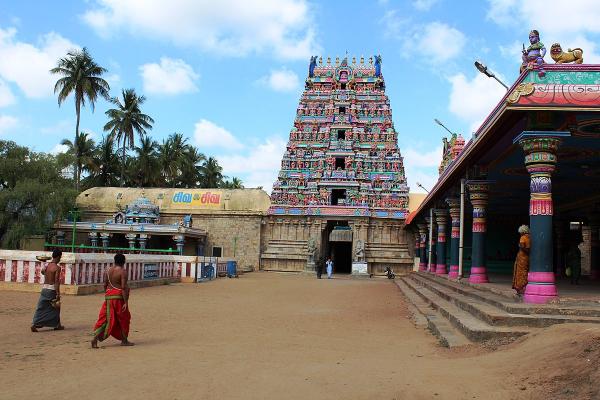
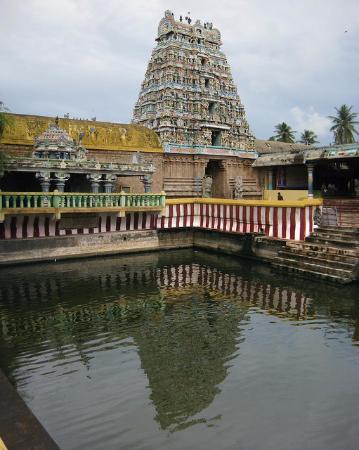
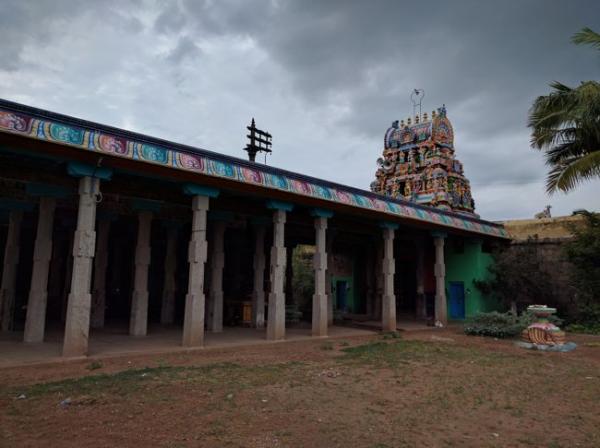
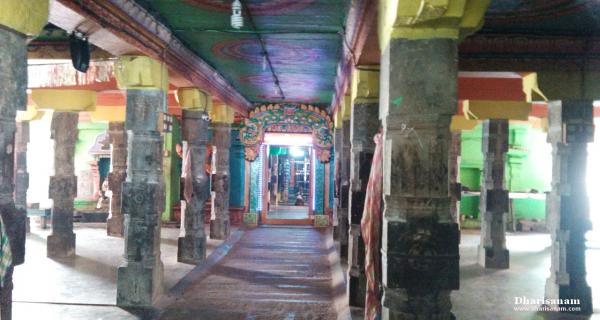
    Kalyanasundaresar Temple or Thirunallur is dedicated to Lord Shiva, located in Nallur, in the outskirts of Kumbakonam. Shiva is worshiped as Kalyansundaresar or Panchavarneswarar and his consort Parvati is depicted in many names like Girisundari, Kalyanasundari, Tiripurasundari, Vanduvaazh Kuzhali. Lord Panchavarneswarar is Swayambu in this Sthalam.
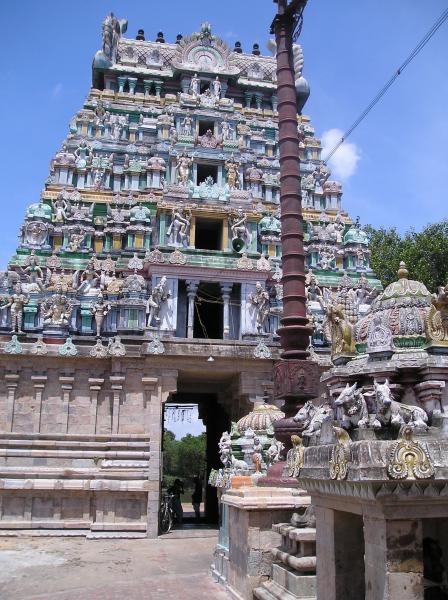
    There are 23 stone inscriptions in this temple which mostly date back to the periods of Chola kings – Uthama Chola, Raja Raja Chola I and Rajendra Chola I. A few inscriptions belong to the Hoysala and Vijayanagara empires. This temple is under the administrative control of Thiruvavaduthurai Aadheenam since the early part of the 13th century.


    As per Hindu mythology, Adisheshan (the serpent on whom Sri Mahavishnu rests) and Vayu (lord of the winds) fought among themselves frequently to test their superiority. During one such struggle, against Vayu’s severe wind, Adhiseshan failed to hold on to the sacred mountain Maha Meru.  In this process, two peaks of the mountain were dislocated and fell onto the earth, one at this place Nallur and the other at Aavoor, a nearby village. The Shivalingam here is believed to have formed from the mountain peak that fell here.
    Lord Shiva’s lingam here changes its colour 5 times in a day, – copper, pink, gold, emarald green and one that could not be recognised. Hence, the lord is praised as “Sri Panchavarneswarar” (“pancha” means five, “varnam” means colour and “eswarar” means the lord in Tamil). Inside the sanctum, at the back of the main lingam, there is a sculpture of Lord Shiva and Goddess Parvathi in their wedding form. Mahavishnu and Brahma can also be seen in this sculpture.


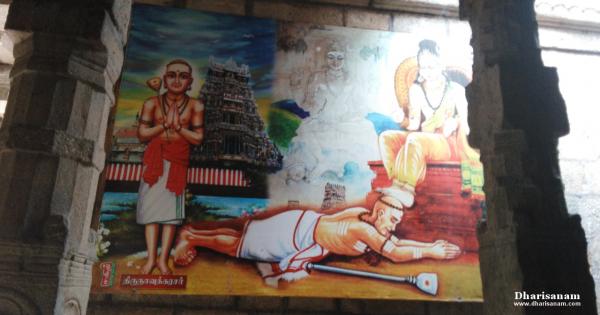
    According to legend, when Saint Thirunavukkarasar pleaded to Lord Shiva for “Thiruvadi deeksha” (Feet Darshan), Lord Shiva advised the saint to come to this Nallur temple. It is believed that Lord Shiva gave the Thiruvadi deeksha to Saint Thirunavukkarasar here by placing his feet on the saint’s head. A unique tradition in this temple is that, “Sadaari” (lord’s foot) is placed on the heads of devotees as a form of blessing. Usually “Sadaari” blessing is given in all Vaishnava temples. This is the only Shiva temple to follow this tradition. In his hymn, Saint Thirunavukkarasar refers this place as “வடபால் கயிலையும் தென்பால் நல்லூரும் தம் வாழ்பதியே”, meaning – Kailash in the North and Nallur in the South are the places where Lord Shiva lives.
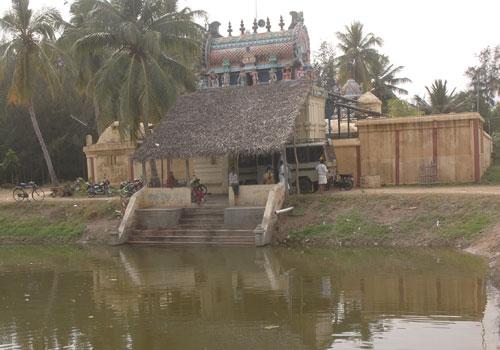
    Amaraneethi Nayanar, one of the 63 Nayanmars in Shaivism lived and attained salvation here. The temple tank called “Saptha Sahara Theertham” is believed to be created by Saint Narathar, with the water from all seven oceans of world to help Kunti Devi (Mother of Pandavas in Mahabharatha) getting relieved from her sins. Since Kunti Devi belongs to the star Magam, it is said that women of Magam star can be relieved of any Dhosam by taking bath in this Theertham.
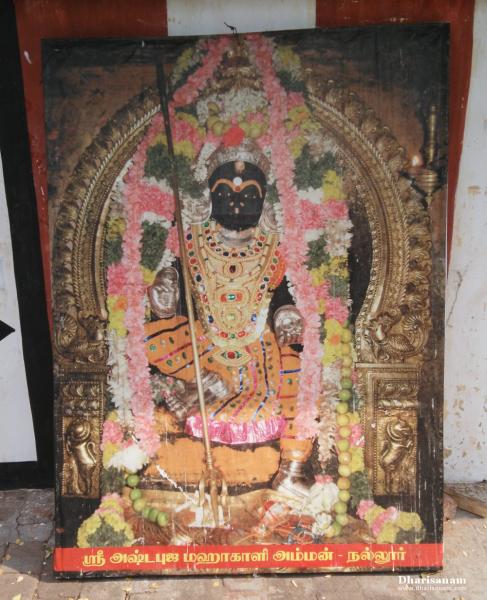
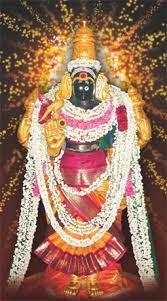
    Ashtapuja Kaali (with 8 hands) is housed in the south corridor of this temple. This Kaali is very popular among women devotees, especially pregnant women. They conduct their bangle wearing ceremony here during their pregnancy and pray for an easy and safe delivery.


    It is believed that ancient Chola King Kochengat Cholan built about 70 “Madakkoils”. The distinguishing feature of a Madakkoil is that it is not easily approachable by an elephant. He built these temples at an elevation and there are a few steps that need to be climbed before seeing the lord. Also, the sanctum sanctorum’s (Karpagragam) entrance is narrow such that no elephant can enter it. This temple is also a Madakkovil.


    The “Balipeeta” (platform for making offerings) is referred to as Lord Gananathar. It is considered to be a form of Lord Shiva. There are only two places where Gananathar can be seen in this form – one in Varanasi (Kasi) and the other one here.
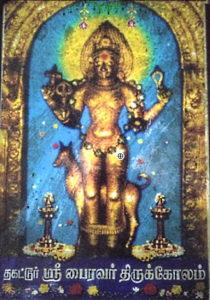


  • Thagattur Kala Bhairavar Temple

    Kala Bhairavar is the ferocious form of Lord Shiva and normally seen with angry eyes, blazing hair, tiger’s teeth, snake coiled around his neck and in some places with even garland of human skulls. Kala Bhairavar carries a trident, a drum and the severed fifth head of Brahma. His third eye represents eternal supreme wisdom. One’s fear get destroyed when they worship Lord Bhairava. However, in some of the temples he is depicted in sober form too.


    One such unique Lord Kala Bhairavar Temple is located in a small village called Thagattur in Nagapattinam district. The temple is believed to be 1500 years old. This is one of the rare temples where Lord Kala Bhairavar is the main deity in the sanctum (Moolavar). Thagattur comes from the word Thagadu, which is Yantra in Sanskrit. Generally, Yantras like Sri Chakras are installed in temples and one such yantra is installed in this temple too. Sri Sattainathar (Form of Bhairavar) is the procession deity (Urchavar) of this temple.

    This temple also has shrines for Lord Kasi Vishwanathar, Goddess Visalakshi, Lord Vinayaga, and Lord Subramanya (Lord Muruga) with his consorts Valli and Deivanai, Goddess Durga and Lord Chandikeswara.  It is said that offering worship in the sanctum sanctorum of Lord Viswanathar in this temple, one begets the same fruits and benefits of offering pooja to the same Lord in Varanasi (Kasi) because of the legend of this temple.


    Legend says that, at the end of Ramayana war, Lord Sri Rama decided to perform Shiva puja in Rameswaram to get rid of the sin of Brahmahaththi Dosha accrued out of killing Ravan. He therefore requested Lord Hanuman to go to Kasi and get him a Shiva Linga from there. When Lord Hanuman reached Kasi, he did find thousands of Shiva Lingas enshrined by the saints and sages. When Lord Hanuman found a Swayambu Lingam as advised by Lord Rama, he lifted up the Shiva Lingam and began to fly back. Kasi which was under the control of Lord Bhairavar, who is the guardian deity of the holy land even now, happened to see Lord Hanuman taking away the Shiva Lingam from his domain without his permission, got angry, stopped him and attacked Lord Hanuman from carrying the Shiva Ling from there.

    They fought for several days without an end in sight and the worried Devas ran to Kasi and pleaded with Lord Bhairavar to end the war explaining that Lord Hanuman was actually the divine ambassador of Lord Rama. Lord Bhairavar calmed down and agreed to accompany Lord Hanuman to reach Rameswaram safely with the Shiva Linga and returned back instantly.

    On the way, when Lord Kala Bhairavar reached Thagattur, he felt that he had suddenly turned into a small child for a moment only to regain his original form within fraction of seconds. He realized the same as signal for something and therefore decided to enshrine himself in Thagattur (which was similar to Kasi) in the form of child Lord Kala Bhairavar to grace those who worshiped him in that place.


    Devotees can even notice that Lord Bhairava is the guardian for most of the temples and there is a practice of keeping the key of temple door at the feet of Bhairava idol. The temple has nine different trees each representing one of the nine planets. Therefore, it is believed that when one goes around nine times around these nine trees, they are relieved of the bad effects of the planets, as their powers are under the control of Lord Kala Bhairava.

  • Rameshwaram Kothandaramar Temple

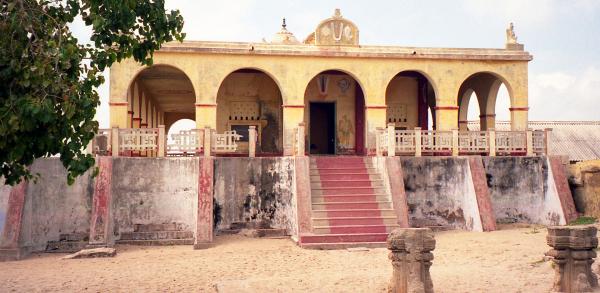
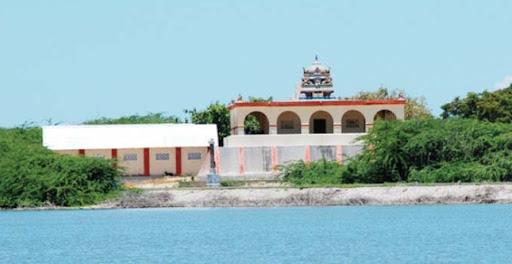
    The Kothandaramaswamy Temple at Rameswaram is a shrine dedicated to the Lord Rama. Located at a distance of 13 kilometres from Rameswaram, it forms the southernmost tip of the island. The temple is surrounded by Bay of Bengal and Gulf of Mannar and this is the only historical structure to survive the deadly 1964 cyclone that washed away Dhanushkodi. The temple has the deities of Rama, Lakshmana, Sita, Hanuman and Vibhishana. A beautiful road with sea in both sides leads to the temple. During winter season (October – November) Sea Gulls, Flamingos and some more birds make their visit to the place near Kothandaramar Temple (Normally these are birds clustered inside the sand pits near the temple). The view of Ramanathaswamy Temple, Doordharshan Tower, Agni theertham from this temple is spectacular.

    As per Ramayana, after the abduction of Sita in a cowardly manner, Vibhishana advised Ravana to return her to Rama and make peace. Ravana did not listen to the advice and he attacked Vibhishana, which led him fleeing from Lanka and joining Rama's army. When Vibhishana surrendered to Rama, the Vanara Sena (Army of Apes) urged Rama not to accept Vibhishana, doubting him to be a spy. However, Rama accepted Vibhishana under the insistence of Hanuman stating that it is his duty to protect the ones surrendered to him. After the slaying of Ravana, Rama performed the "Pattabhishekam" (ascension to king of Lanka) for Vibhishana. This is the place where Vibhishana crowned as the King of Lanka by Sri Rama. The story is depicted in painting across the walls inside the shrine.

    Traditionally, we see Sri Anjaneya in worshiping form in front of Rama in temples. In this Kothandaramar Temple, Vibishana is awarded this right. As he was accepted by Rama in this place, Vibishana is also considered as an Azhwar. Garuda Bhagwan and Acharya Ramanuja have separate shrines in this temple.

    It is said that those who want to be away from the wicked and desirous of following a righteous life pray at this temple for success. Those who seek leadership position and promotions in career worship Lord Kothandarama here offering garlands made of Tulsi to the Lord.


  • Thiruvennainallur Aatkodanathar Temple

    Thiruvennainallur is an ancient village near Viluppuram district which is famous for Aatkondanathar Temple. The main deity of this temple is Lord Shiva, who is called in the names of Aatkondanathar, Arutkondanathar and his consort Parvati is called Mangalambigai, Verkanni Amman. This temple believed to be built 1500 years ago. The 7th century literature Tevaram has a chapter (Pathigam) of verses about the Lord of this temple. Another antient Tamil literature Periya Puranam also mentions this temple.

    Legend of the temple is associated with Sundarar, one of the four great poets (Samaya Kuravar Nalvar) of Shaiva tradition. Sundarar was prevented by an old man from marrying at Tirunavalur. He showed a document that indicated that Sundarar was his slave and he is indebted to the old man for serving him for a lifetime. Sundarar called him 'Piththa', a lunatic. The village elders asked Sundarar to respect document and go with the old man to the court of Thiruvennainallur. Marriage was stopped and Sundarar followed the old man and the old man went to Thiruvennainallur. In the court, it is proved that the document is valid and Sundarar has to serve the old man. After that, the old man took Sundarar into the temple, where he disappeared inside the sanctum. It was Shiva who had appeared as the old man to remind Sundarar that he was born to sing about the Lord and work for the Shaiva tradition. Sundarar felt guilty of calling Shiva as "Piththa" (lunatic), but Shiva revealed to him as divine voice from the sanctum, that he was pleased with him and requested him to sing verses on him. When Sundarar expressed he was unable to sing, Lord himself suggests to start singing with the word Piththa. Then Sundarar sang his first song, "Piththa Piraisudi Perumane Arulala" in this temple and later would become one of the four most greatly respected saints of Saiva Tradition. Lord Shiva stopping Sundarar from getting married is called “Thaduthu Aatkolludhal” in Tamil. And hence the Lord of this temple is called Aatkondanathar.

    The Hall where the case of Sundarar and Lord Shiva (Old man) was enquired still exists inside the temple complex. It is a wonder that, one of the pillars in that hall is always warm. People believe that this is the pillar, Lord Shiva as the Old Man was leaning during the court session.

    Aatkondanathar Lingam is Swayambu (self-manifested) in this temple. The temple is also called Thiru Arulthurai (Home of Divine Blessings). Mother Mangalambigai graces with four hands in standing form. Mother is seen with all features of Mahalakshmi, with Sanga Nidhi, Padma Nidhi and also with Sri Chakra. Lord Vinayaka in this temple is called as “Polla Pillayar”. It is believed that Lord Muruga – Shanmuganathar in this temple, gave darshan to Saint Arunagirinathar in rare dancing form with his peacock.

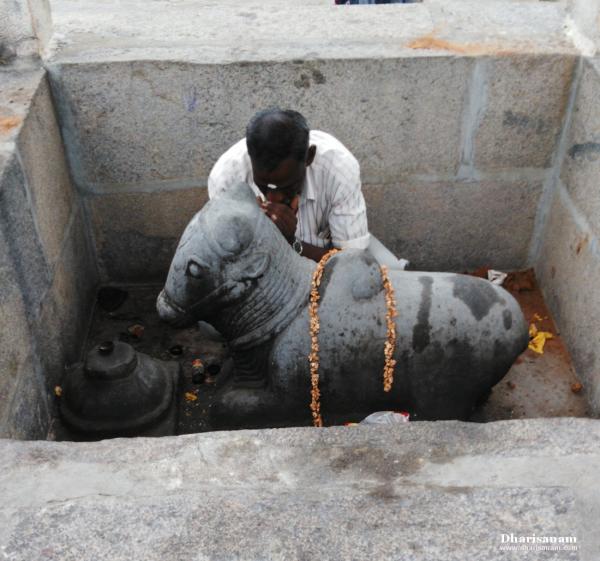
    Those who are impaired of speech pray to Aatkondanathar in this temple. Lord graces devotees with excellence in education and oratory skills. People light lamps with a mixture of four oils made of ghee, iluppu oil, coconut oil and gingelly oil and pray for getting married, childbirth and other success in life. It is the staunch belief of the devotees that their wedding would materialise if they worship the Nandhi with a garland.

  • Thiruvamathur Abirameswarar Temple

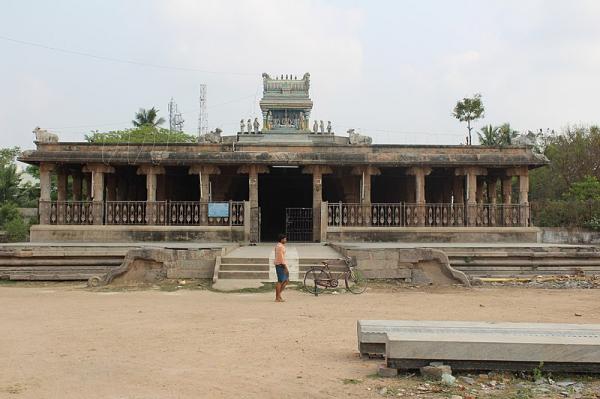
    Lord Abirameswarar or Azhagiya Nathar Temple is situated in a village called Thiruvamathur near Viluppuram District. Thiruvamathur is located on the banks of the Pampa river, a tributary of the Pennai river. The historical names of this place are – Gomathrupuram, Gomatheeswaram and Gomathupuram.

    This temple was originally built by the Pallava rulers. Later on, the Cholas made several endowments. This is evident from the stone inscriptions available here. At a later date, Achutha Deva Pallavar is believed to have renovated this temple. There is an idol of Achutha Deva Pallavar here. In this temple, there are stone inscriptions that document the histories of 26 kings from 955 to 1584 AD. The important kings among them are Rajaraja Cholan-I, Rajendra Cholan-I, Rajathi Rajan-I, Kulothungan-I, Vikramathithan, Sadaya Verman, Vikrama Pandian and Krishnadeva Rayar. The stone inscriptions also reveal that a Chola king sanctioned a grant that helped several blind students learn the devaram hymns and sing them in the temples.

    The main deity of this temple Lord Shiva is called Abirameswarar, Azhagiya Nathar and his consort Parvathi is called as Muthambigai Amman, Azhagiya Nayagi. Legend of this temple says that – in ancient times this place was densely covered with Vanni trees. It is believed that at that time the cows did not have any horns and were frequently tormented by other wild animals. It is believed that the cows went to Nandhi (Lord Shiva’s bull mount) to seek protection.

    Nandhi advised them to come to this place and worship the lord. Nandhi along with Kamadenu (the divine cow who grants all wishes of devotees) and other cows of the world came to this place and worshiped the lord. Pleased with their penance, Lord Shiva blessed them with horns to protect themselves. The name of this place “Thiru Amathur” is derived from “Thiru Aa Matha Vur” – “Aa” means cow, “Matha” means mother, “Vur” means village in Tamil and “Thiru” is a respectful prefix. For this reason, this place is revered as the “parental house” for all the cows.


    It is believed that, all gods including Lords Shiva, Mahavishnu, Brahma, Goddess Parvathi, Lakshmi and Saraswathi and all Devars reside in the body of the cow. It is believed that the divine cow, Kamadenu along with all other cows worshiped the main deity Abirameswarar here by pouring their milk on the lingam. The marks of the cow’s hoof and rivulets due to the pouring of milk can be seen on the lingam even today.

    There is a place inside Goddess Muthambikai’s temple called the “Thiruvattaparai” and there is a Shivalingam in Thiruvattaparai which is very famous. There is a small hall (Mandapam) called “Sathya Palakai” (a place to make promises) in the southwest corner of the Goddess shrine. According to legend, sitting at this spot, Lord Rama along with Hanuman entered into an alliance with Sukrivan to fight and kill Ravana. There is a well inside this temple called “Dhanda Theertham” which is believed to have been created by Lord Rama. Since Lord Rama worshiped here, the main deity is called Abhirameswarar (Abhi means ‘with affection’). Even today, people who have been wrongly accused of some crime come to the “Sathya Palakai” at the “Thiru Vattaparai” and make pledges to prove their innocence. It is strongly believed that if someone makes a false promise at this place, they will be severely punished by the Goddess. The legend is that Goddess Muthambikai once punished a man by having him bit by a snake because he had cheated his younger brother and made a false promise at this place. To signify this event, the tail portion of a snake adorns the Goddess’s chest. This can be seen during abishekam. The idol of Nandhi is housed inside a pit. This pit is filled with water during periods of drought in the hope that it will bring rain.

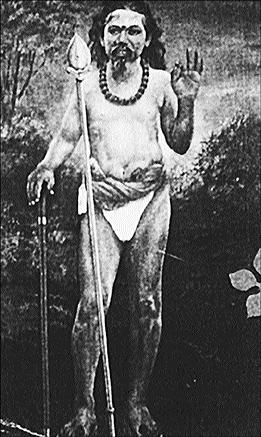
    Saint Arunagirinadhar has sung songs in praise of Lord Murugan of this temple in his revered Thirupugazh. The famous poet Vannacharabam Sri Dandapani Swamigal (1839-1898), although born in Thirunelveli, spent the later part of his life in this place. He was a strict follower of the principles of Ahimsa and a staunch devotee of Lord Murugan. He visited many temples in the entire Tamil region, including Sri Lanka. He visited about 222 temples and rendered his songs. His contribution is as valuable as that of the Devara Moovars and Saint Arunagirinathar. He also wrote the “Thiruvamathur Sthalapuranam”. He set up a mutt, “Kaumara Mutt” here and spent most of his time in spreading the glory of Lord Murugan. This Kaumara Mutt is said to be the first Kaumara Mutt in the world. He is considered to be the reincarnation of Saint Arunagirinathar. It is believed that in his lifetime he wrote about one lakh poems. His final resting place (“Samathi”) can be seen inside the mutt.

  • Patteeswaram Thenupuriswarar Temple

    Thenupuriswarar Temple is a temple dedicated to the God Shiva located in the holy village of Patteeswaram. Patteeswaram is situated at a distance of about 8 kms from Kumbakonam. Main deity of this temple is called Patteeswarar or Thenupuriswarar and his consort Goddess Parvati is called, Gnanambigai or Palvalainayagi. This temple is also famous for the worship of Mother Durga.

    Patteeswaram Thenupuriswarar Temple ancient temple is on the northern bank of the river Thirumalairayan. This temple is very big and is spread over a sprawling 4.4-acre temple campus. It has 4 main towers at all the four entrances. The historical names of this place are Mazhapadi, Patteecharam, Devivanam and Shaktivanam. Historically Patteeswaram comes in the border of the ancient city ‘Pazhayarai’ which was the capital of the Chola Kingdom before Thanjavur.

    The legend is that Patti, the daughter of the divine cow Kamadenu, worshipped the lord here. Hence this place gets the name Patteecharam (“Echaram” means temple in Tamil). The lord is praised as Sri Patteeswarar (Sri Thenupureeswarar in Sanskrit).

    It is believed that Goddess Parvathy had performed penance here. Devas came here in the form of trees and plants to protect her and make the environment green. Kamadenu sent her daughter Patti to assist Goddess Parvathy. Pleased with her penance, Lord Shiva blessed her with his darshan. In this darshan he was seen with his dreadlocks (“jadamudi”).

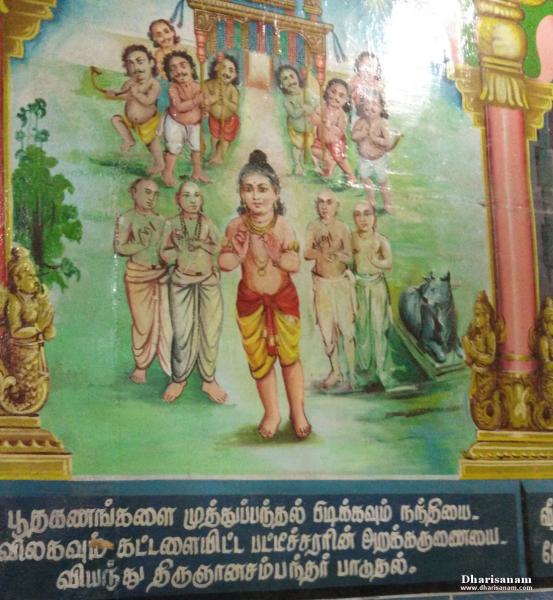
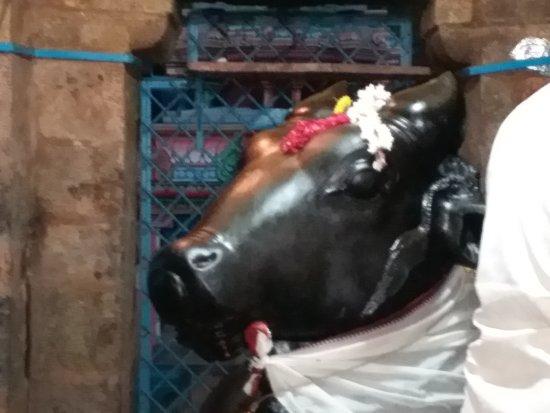
    Another legend is that Saint Thirugnanasambanthar, after worshiping the lord at Sakthi Mutram, a nearby Lord Shiva temple, proceeded to visit this temple. It was a peak summer day and in order to protect him from the oppressive heat, Lord Shiva created a tent lined with pearls (“Muthu panthal”) and sent it through his attendants (“Bhootha ganas”). He also advised the Nandhi to move a little bit to the side so that he could see the beautiful sight of Sambanthar arriving through the pearls roof. Devotees can see the Nandhi in this temple is not straight to the Lord as seen in other temples.

    It is believed that Lord Rama worshipped Lord Shiva here to seek pardon for the sins (“Chayahathi dosham”) that he had accrued by killing Ravana, Vaali and others. This event is commemorated every year during the Tamil month of Margazhi (Dec-Jan). He created a well here and used this water to perform abhishekam to Lord Shiva. This well is known as “Rama Theertham” or “Kodi Theertham”. This Theertham is considered to be equivalent to “Dhanushkoti Theertham”. Sage Viswamitra worshiped the lord here and it is believed that he attained the full power of the holy “Gayathri Mantra” and also received the title of “Brahma Rishi” in this temple.


    Goddess Vishnu Durgai’s shrine, located at the northern entrance of this temple, is very popular among devotees. This temple is also known as Durgai Amman temple. The Idol of Mother Durga was originally placed inside the Pazhayarai Fort and worshiped by Chola Kings every day. Chola kings including the great Rajaraja Chola I were staunch devotees of Goddess Durgai. She was the guardian and advisor of Chola dynasty and Chola Kings used to get her permission (“Deiva Vaakku”) before going to war or taking any important decision. She is also known as “Kottai Vayil Durgai”. After the decline of the Chola empire, the idol of Durgai Amman was installed in this temple.

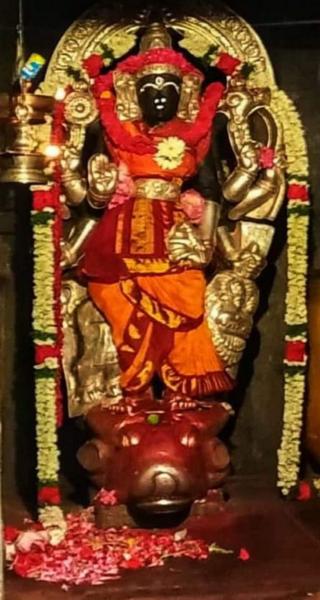
    The Goddess here is known by many names such as Vishnu Durgai, Durga Lakshmi, Navayoga Nayaki, Navakoti Nayaki, Navagraha Nayaki, Navaratri Nayaki and Navasakthi Nayaki, to name a few. Unlike in other temples, Goddess Durgai here has a pleasing appearance (“Shanta Swarupi”). She appears in a Thribanga stature – with eight hands, three eyes, wearing ear rings (“kundalam”) and standing on top of the demon Mahishasuran. Generally, her mount (lion) looks towards the right side whereas here it faces left.

    Devotees worship Lord Shiva of this temple to seek the blessing of prosperity and wisdom. Devotees can get relief from the adverse effects of planets Raahu and Kethu by worshiping Goddess Durgai here. Devotees pray to Lord Bhairavar here to seek relief from enemy threats and for cure from dog bites and other ailments.


  • Uma Maheswarar temple, Konerirajapuram

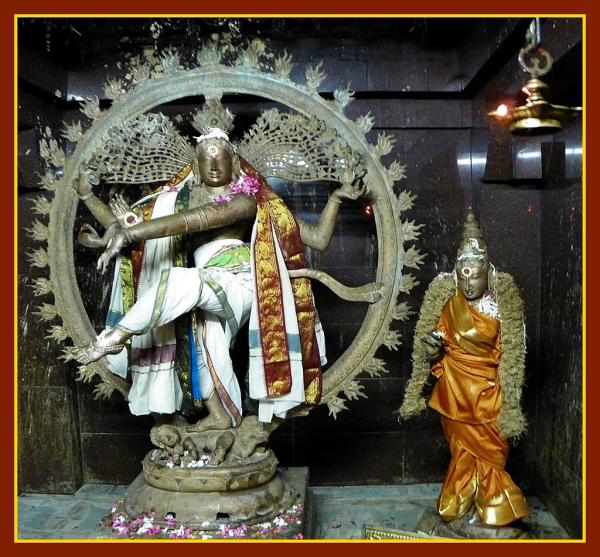
    Uma Maheswarar Temple of Konerirajapuram near Kumbakonam in the Nagapattinam district of Tamil Nadu is very famous for the unique Swayambu metal Lord Natarajar – the biggest Nataraja statue in the world.

    The historical name of this place is Thiru Nallam. It is believed that this place got submerged and later excavated. Queen Sembian Mahadevi, wife of Chola King Kandarathithan and the Grandmother of king Raja Raja Chola, replaced the old brick temple with granite and expanded the premises.

    Shiva is worshiped as Uma Maheswarar and is represented by the lingam and his consort Parvati is depicted as Mattuvar Kuzhalammai. The presiding deity is revered in the Devaram, written by Tamil saint poets nayanmars – Sampanthar and Thirunavukkarasar – and is therefore a Paadal Petra Sthalam. 16 among 18 Sidhdhars have prayed at this temple. 

    The presiding deity is Shiva. The goddess is Angavala Nayaki. There are also shrines to Brahma and Vishnu within the complex. There are also shrines for Ganesha and Murugan as Vaidhyanathaswami.


    Nataraja of this temple is world’s biggest and tallest Nataraja sculpture in panchaloha (amalgam of five metals). This is the only temple in the world which has swayambu Nataraja which is said as "Theenda Thirumeni" meaning- sculpture not even touched by a sculptor. 

    Legend behind this swayambhu goes like this: when King wanted to install a tall Panchaloha Natarajar idol, he asked his court sthapathi to make one to the size of a tall human being. Being a staunch devotee of Lord Siva, sthapathi was enthralled to make one and he prepared moulds, but he could not succeed. When he was busy preparing a huge mould, a couple appeared before him, from nowhere and asked for some water. Since sthapathi was dejected and worried about his work, he yelled at them to drink molten panchaloka metal kept in the vessel. The couple drank that and to the surprise of the sthapathi, they turned out to be Lord Nataraja in dancing form and Parvarthi Devi next to him.

    When king came to inspect the work, sthapathi narrated whole thing happened just then. But king did not believe, and he furiously drew his sword. The sword left a cut mark in Dancing Nataraja’s left leg and blood oozed out and splashed on the king. King immediately developed leprosy and he prayed to Lord to forgive him for his mistake. Lord Siva appeared and told the king to pray to Lord Vaithiyanatha Swami who is going to stay in that Temple and bless all his devotees to ward of all health problems. Here in this temple Vaithiyanatha Swami is very powerful and devotees throng this temple on Tuesdays to offer prayer and poojas.

    This Lord Nataraja is seen like a human, with mole in His left armpit and the sword cut mark in his lifted left leg which looks very natural like human body. This is an antique wonder.