Tag: Temple Series

  • Patteeswaram Thenupuriswarar Temple

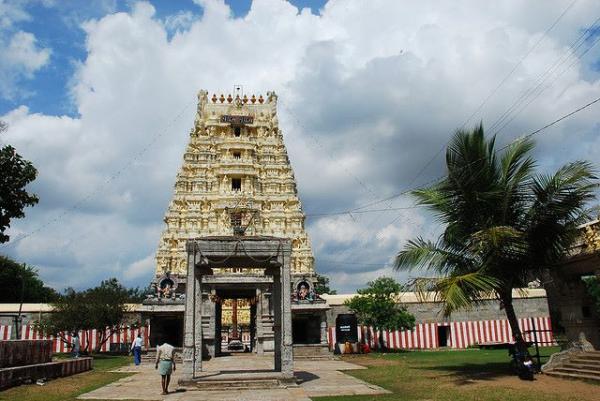
    Thenupuriswarar Temple is a temple dedicated to the God Shiva located in the holy village of Patteeswaram. Patteeswaram is situated at a distance of about 8 kms from Kumbakonam. Main deity of this temple is called Patteeswarar or Thenupuriswarar and his consort Goddess Parvati is called, Gnanambigai or Palvalainayagi. This temple is also famous for the worship of Mother Durga.
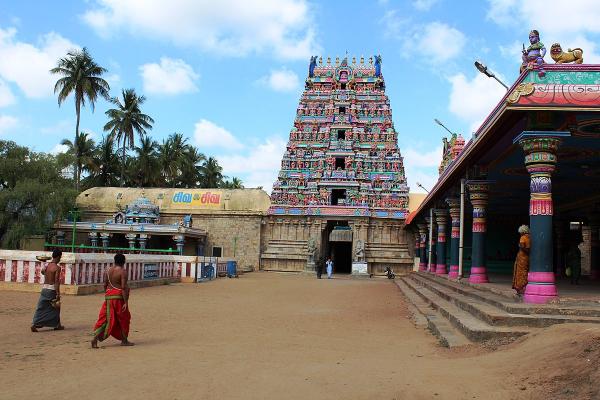
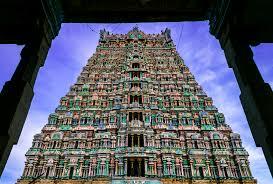
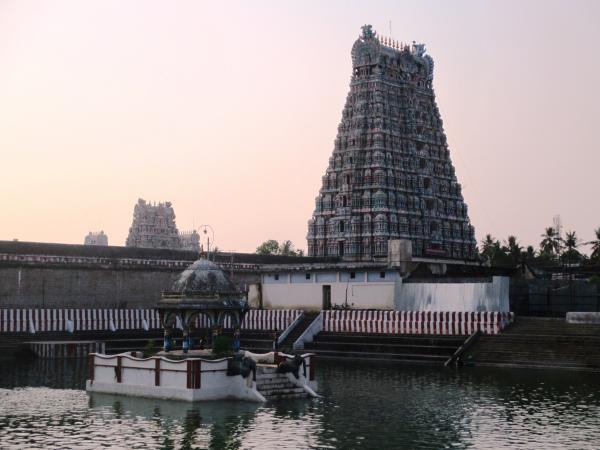
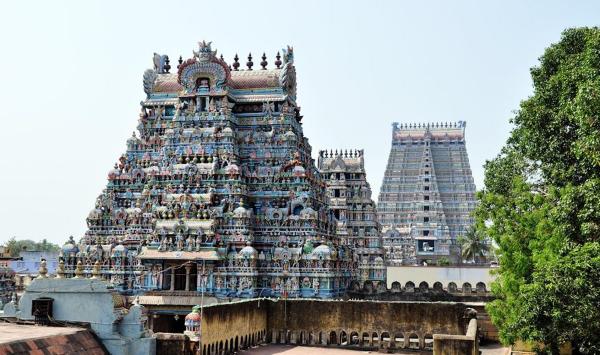
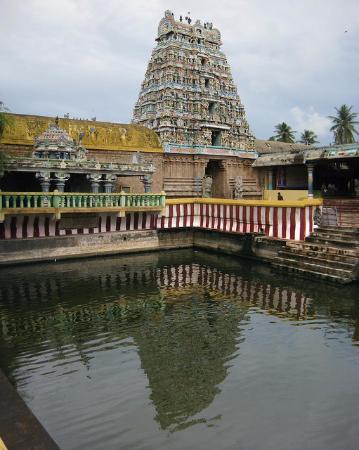
    Patteeswaram Thenupuriswarar Temple ancient temple is on the northern bank of the river Thirumalairayan. This temple is very big and is spread over a sprawling 4.4-acre temple campus. It has 4 main towers at all the four entrances. The historical names of this place are Mazhapadi, Patteecharam, Devivanam and Shaktivanam. Historically Patteeswaram comes in the border of the ancient city ‘Pazhayarai’ which was the capital of the Chola Kingdom before Thanjavur.

    The legend is that Patti, the daughter of the divine cow Kamadenu, worshipped the lord here. Hence this place gets the name Patteecharam (“Echaram” means temple in Tamil). The lord is praised as Sri Patteeswarar (Sri Thenupureeswarar in Sanskrit).
    It is believed that Goddess Parvathy had performed penance here. Devas came here in the form of trees and plants to protect her and make the environment green. Kamadenu sent her daughter Patti to assist Goddess Parvathy. Pleased with her penance, Lord Shiva blessed her with his darshan. In this darshan he was seen with his dreadlocks (“jadamudi”).

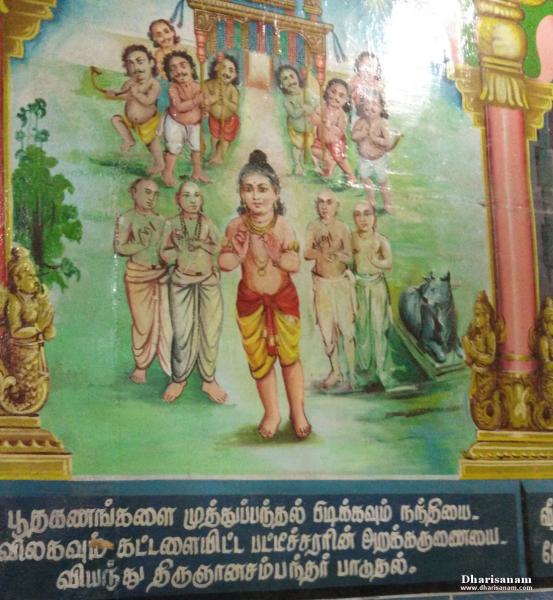
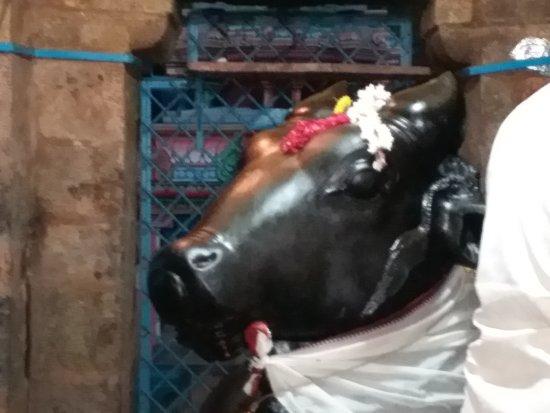
    Another legend is that Saint Thirugnanasambanthar, after worshiping the lord at Sakthi Mutram, a nearby Lord Shiva temple, proceeded to visit this temple. It was a peak summer day and in order to protect him from the oppressive heat, Lord Shiva created a tent lined with pearls (“Muthu panthal”) and sent it through his attendants (“Bhootha ganas”). He also advised the Nandhi to move a little bit to the side so that he could see the beautiful sight of Sambanthar arriving through the pearls roof. Devotees can see the Nandhi in this temple is not straight to the Lord as seen in other temples.
    It is believed that Lord Rama worshipped Lord Shiva here to seek pardon for the sins (“Chayahathi dosham”) that he had accrued by killing Ravana, Vaali and others. This event is commemorated every year during the Tamil month of Margazhi (Dec-Jan). He created a well here and used this water to perform abhishekam to Lord Shiva. This well is known as “Rama Theertham” or “Kodi Theertham”. This Theertham is considered to be equivalent to “Dhanushkoti Theertham”. Sage Viswamitra worshiped the lord here and it is believed that he attained the full power of the holy “Gayathri Mantra” and also received the title of “Brahma Rishi” in this temple.


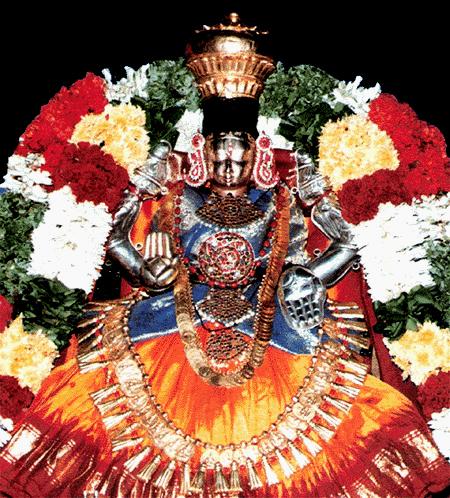
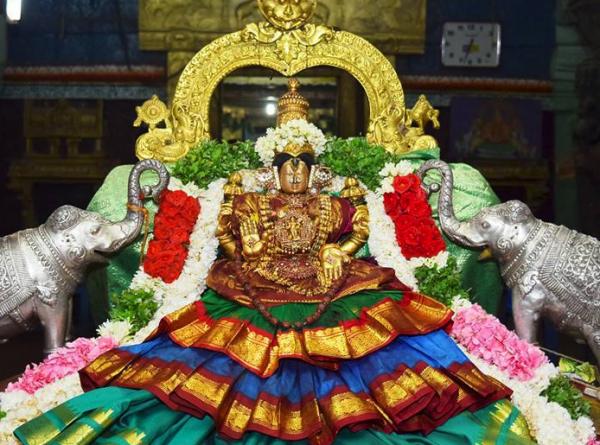
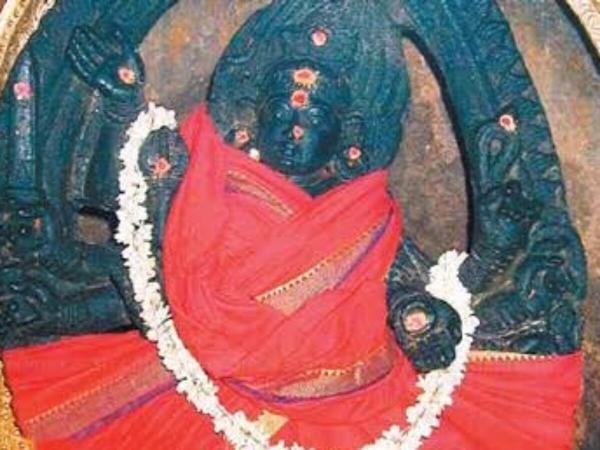
    Goddess Vishnu Durgai’s shrine, located at the northern entrance of this temple, is very popular among devotees. This temple is also known as Durgai Amman temple. The Idol of Mother Durga was originally placed inside the Pazhayarai Fort and worshiped by Chola Kings every day. Chola kings including the great Rajaraja Chola I were staunch devotees of Goddess Durgai. She was the guardian and advisor of Chola dynasty and Chola Kings used to get her permission (“Deiva Vaakku”) before going to war or taking any important decision. She is also known as “Kottai Vayil Durgai”. After the decline of the Chola empire, the idol of Durgai Amman was installed in this temple.
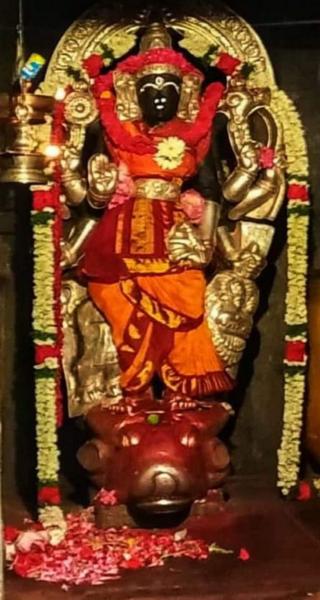
    The Goddess here is known by many names such as Vishnu Durgai, Durga Lakshmi, Navayoga Nayaki, Navakoti Nayaki, Navagraha Nayaki, Navaratri Nayaki and Navasakthi Nayaki, to name a few. Unlike in other temples, Goddess Durgai here has a pleasing appearance (“Shanta Swarupi”). She appears in a Thribanga stature – with eight hands, three eyes, wearing ear rings (“kundalam”) and standing on top of the demon Mahishasuran. Generally, her mount (lion) looks towards the right side whereas here it faces left.
    Devotees worship Lord Shiva of this temple to seek the blessing of prosperity and wisdom. Devotees can get relief from the adverse effects of planets Raahu and Kethu by worshiping Goddess Durgai here. Devotees pray to Lord Bhairavar here to seek relief from enemy threats and for cure from dog bites and other ailments.
     

  • Pillayarpatti Vinayagar Temple

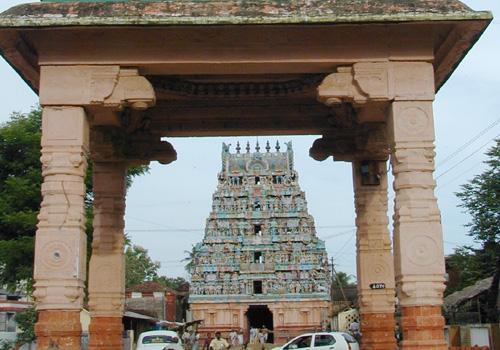
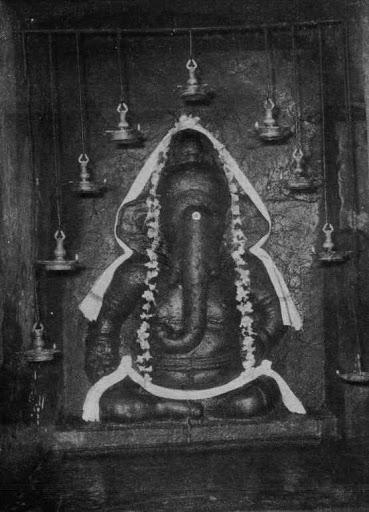
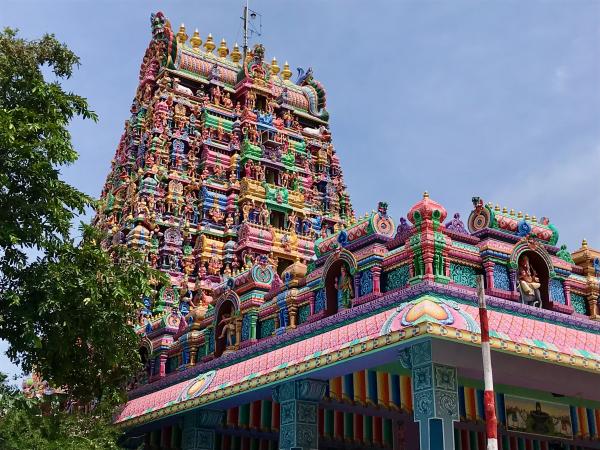
    Pillayarpatti Karpaga Vinayagar Temple is one of the ancient rock-cut cave temples in Tamilnadu. Located in between Sivagangai and Karaikudi in Sivagangai district, this is the most famous Vinayagar temple in South India. This village derives its name from the image of Lord Pillayar (Ganesha), known as Karpaga Vinayaka (Karpagam is a tree which grants all our wishes). The Lord is seated and appears with only two arms, the left being on the hip and right holding a Modhaka (‘Kozhukattai’ – the favourite dish of Lord Ganesha). The trunk is turned to the right. There is no sacred thread (Poonul) on this Ganesha sculpture.


    The trunk of Vinayagar in this temple is curled towards his right in the Valampuri mode. This 6-foot-tall mammoth image of Ganesha is a bas relief in an excavated cave, off of a hill in the precincts of the temple. Tiruveesar is a Shiva Lingam carved in a similar manner in this temple. Other deities in the temple include Marudankudi Eesar (Lord who lives under Marudham tree) and his consort Vaadaamalar Mangai. Marudham tree is the sthala vriksham of this temple.

    The temple has several inscriptions within the rock-cut shrines, as well as on the walls and mandapam outside. One of them helps to date the core layer of this temple to the 7th-century. Another notable inscription in the sanctum is more archaic, sharing paleographic features of Tamil Brahmi and early Vatteluttu. This has led to proposals that portions of this Vinayagar temple are likely older by a few centuries. The temple walls and mandapams have additional stone inscriptions from the 11th to 13th-century. In late 19th-century, during restorative excavation and repair work, panchaloga statues were discovered. These are dated to the 11th-century.


    The temple in its contemporary form has many layers of additions and restorations completed over nearly 1,400 years. The earliest layer that can be dated with certainty is the 7th-century rock-cut cave temple. This rock-cut cave is attributed to Narasimhavarma, (650 CE). Several rock-cut Hindu gods and goddesses are displayed in this earliest layer. The cave also includes inscriptions and unusual iconography.


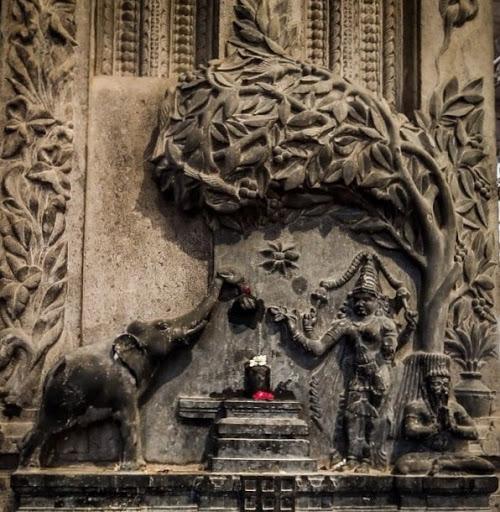
    Interestingly, between the rock-cut Ganesha and the rock-cut Shiva shrine is another unusual bas-relief sculpture of a standing royal human form with two attendants. This has been variously interpreted as Ardhanarishwara (half Shiva, half Parvati) or Harihara (half Shiva, half Vishnu) or a king between two officials (King who constructed the temple). The difficulty and complexity with these interpretations is its simplicity, lack of classic emblems (icons), and the presence of certain icons. Researches are still going on to find out who is depicted in that bas-relief.

    The sculpture of Pasupatheeswarar with a cow worshipping Lord Siva by offering his milk is one of the special feature of this temple. Kubheran (God of Wealth) had worshipped at this temple. Also adding to the sanctity, Goddesses Laxmi, Saraswathi and Durgai are found together at the same sanctum. Unlike other places the three Lingams Thiruveesar, Marudheesar and Senchadeswarar and the three Goddess Sivagami amman, Vaadamalar Mangaiamman and Soundara Nayagi amman all appear together at the same place and bless the devotees.

    It is believed that by worshipping Kathyayini Amman at this temple, women get relived from sevvai dosham which prevent them from getting married. "Sabda Madhar" whom importance due to changing time are provided with a seperate sannidhi known as Sakthi sannidhi at this temple.


  • Namakkal Bhaktha Anjaneya Temple

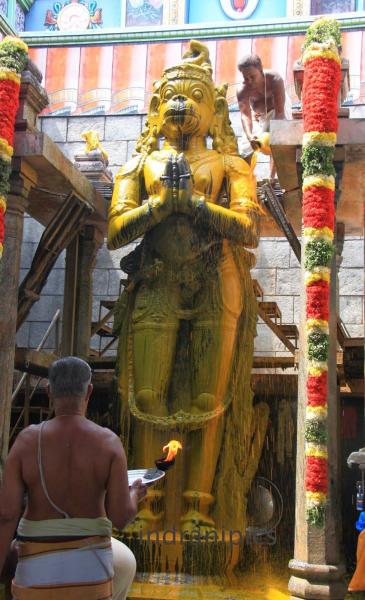
    Namakkal Anjaneyar temple is located in Namakkal town and is constructed in the dravidian style of architecture. The legend of the temple is associated with Lord Narasimha, an avatar of Lord Vishnu appearing for Hanuman and Lakshmi. The idol of Anjaneyar is 18 ft tall, making it one of the tallest idols of Hanuman in India. The idol is carved out of a single stone and believed to be existing from the 5th century. The Agamam (rules for performing pooja) followed in this temple is "Sri Vaikhanasam".

    Legend of this temple says, while Sri Anjaneya was bathing in the holy river Kandaki in Nepal, he got a sacred Saligrama stone. As the stone was in the shape of Lord Vishnu, Anjaneya was carrying it through the sky through this place. He had to take bath, but could not as the Saligrama should not be placed on earth. He then found Goddess Mahalakshmi doing penance in this place. Mother told Anjaneya that she wanted to see Lord in the form of Narasimha and hence doing penance. Anjaneya requested mother to hold the Saligrama till he returns after bath. The mother Mahalakshmi agreed on a condition that he should return on time, but Anjaneya could not complete it. So, she placed the Saligrama on the ground and it grew into a mountain. Lord Narasimha appeared before Mahalakshmi and stayed here as Lakshmi Narasimha. Anjaneya also stayed here itself then.

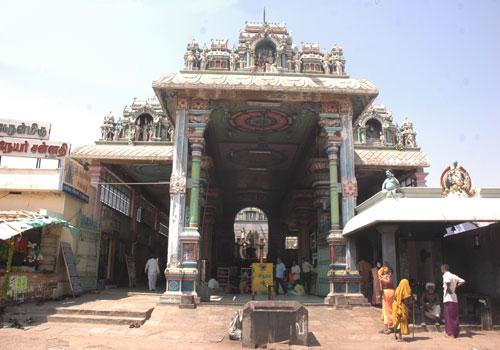
    The temple is located on the foot of Namakkal hill on the road from Namakkal to Salem. The temple has a flat gateway tower with a pillared hall leading to the Sannidhi which houses the image of 18 ft Anjaneyar axially facing the Narasimha shrine in the foothills, 430 ft away. There is no roof over the sanctum and Anjaneyar has a unique iconography sporting a sword in his waist and holding a garland made of Saligram.

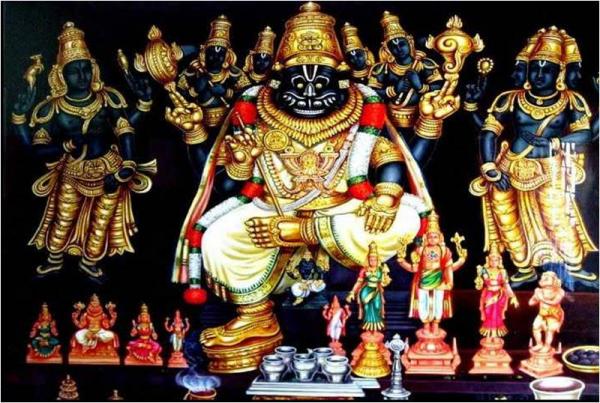
    The speciality of Lord Narasimha here is, the idol has sharp nails used to kill demon Hiranyakasibu and there are blood stains in the palm of Lord. There is Sun, Moon, Brahma, Sanathanar, Janaka around him. As the Lord is Kudavarai Moorthy, there is no Thirumanjanam (Abishekam) for him. It is performed to the Urchavar only. Generally, Mother Lakshmi is seen sitting on the lap of Sri Lakshmi Narasimha. Here Mahalakshmi has a place on the chest of the Lord. Sri Namagiri Thayar (Mahalakshmi) has a separate shrine facing east here. Those who wishes to become a mathematics pundit comes here to worship Goddess Namagiri Thayar.

    The paintings of Sri Ashtapura Narasimhar, Vaikunda Perumal, Sri Varahar and Ulagalandha Perumal (Lord who measured three worlds in three steps) are the ones which devotees should not miss to see here. The major festival of the temple is the fifteen-day Panguni Uthiram festival celebrated during the Tamil month of Panguni (March – April) when the image of presiding deities are taken around the streets of the temple. Devotees pray Lord Anjaneya here for academic success, child boon and successful marriage life.

  • Mannarkudi Rajagopalaswamy Temple

    Rajagopalaswamy Temple in Mannargudi town near Thanjavur, is one of the most ancient and important Lord Krishna temples in the country. It is also called ‘Dakshina Dwaraka’. The ancient town of Mannargudi was just an Agraharam until the entry of Thanjavur Nayaks in the 16th century. The beautiful Agraharam derived its name from Mannarkovil or Rajamannarkovil. In Tamil Vaishnavaite literature, Mannar means 'Lord Vishnu' and Kovil means 'the abode of Vishnu'. Initially, Mannargudi was bordered by the tall compound walls of Rajagopalaswamy temple. It became popular only when Thanjavur Nayaks made it their capital and Rajagopalaswamy Temple became the centre of attraction.

    The legend behind the temple says that, Sages Gopila and Gopralaya underwent severe penance praying to Sriman Narayana. Lord was pleased at the devotion of his devotees and instructed them to visit Dwaraka to attain the blessings of Lord Krishna. Sage Gopila and Gopralaya went to Dwaraka and when they arrived at Dwaraka, the Krishnavathar of Lord Vishnu was over. Sages were disappointed and very much disheartened. Narada maharishi advised the sages to go to Mannarkudi and do penance to have Krishna Darisanam. Sages arrived in this sacred land and continued to follow severe penances and they prayed to Sriman Naryana. The Lord was pleased at their devotion and once again revealed Krishnavathar and showed them the form of all 32 Leelas he did in Dwaraka. As requested by the sages Lord stayed at this place as Rajagopalan and Vaasudevan. According to scriptures of Mahabharatha, Sage Pulastya describes the grandeur of this temple to Pithamahar Bheeshmar that whoever stays overnight in this sacred place would achieve the merit of a 1000 Godhanam (donating 1000 cows).

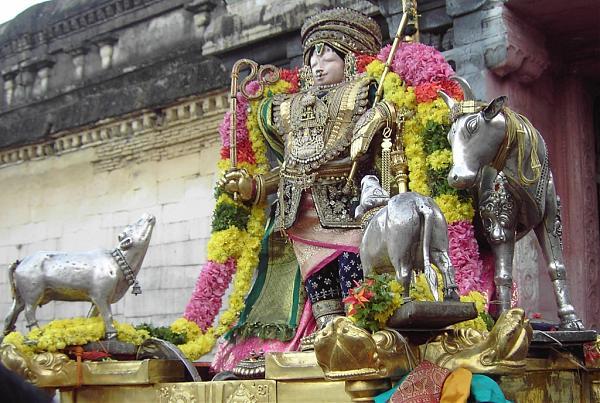
    Mannarkudi Rajagopalaswamy temple is spread over an area of 33 acres. Lord Krishna appears as a shepherd boy with a whip on hand and a turban on his head. He has butter on the right hand and adorned with jewels worn by children with bangles in hand. There is a cow and two calves by his side. Moolavar is called Vaasudeva Perumal and Urchavar is called Rajagopalaswamy. Thayar is called Sengamala Thayar. There are 9 tanks (Theertha Kulam) inside this temple complex.

    This is one of the oldest temples in Kaveri Delta region, built in the year 1072-1150 AD by the King Kulothunga Chola I and II of Chola Dynasty. This grand temple occupies 33 acres of land with a majestic Rajagopuram of 154ft height and it has 7 Praharas, 16 temple Towers, 18 Vimanams and also enshrines of 24 Gods and Goddess. In this temple the 1000 pillar mandapam and the magnificent wall encircled the temple are built by the King Vijayaraghava Nayak. He also erected the big Raja Gopuram in the temple so that he can view the Srirangam Ranganathaswamy temple from the top of it. The Nayaks were especially interested in music and it was promoted in the temples. Instruments like Mukhavina, Dande, Kombu, Chandravalaya, Bheri and Nadhaswaram were commonly used in the temple service.

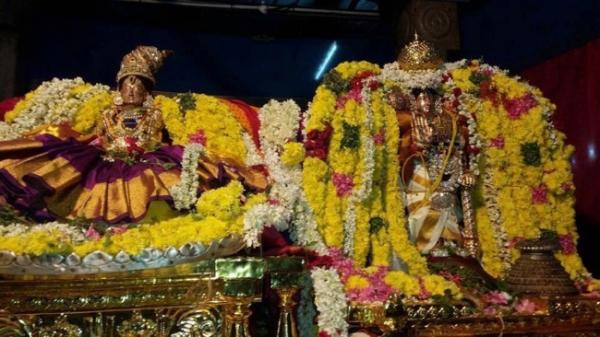
    The 18-day Panguni Brahmotsavam celebrated during March-April every year is very among Vaishnavites al over the world. It is said that Rajagoplaswamy temple has not been glorified by Azhwars. But there are evidences that Thirumangai Azhwar set up a Kodi Maram (flag post) outside the temple with the help of cotton bales. Also, various Azhwars have visited the temple. Unfortunately the ancient scriptures of Divya Prabandhams have not been discovered like many lost Tevaram songs.

  • Thiruvanaikkaval Akilandeswari Amman sametha Jambukeshwarar Temple

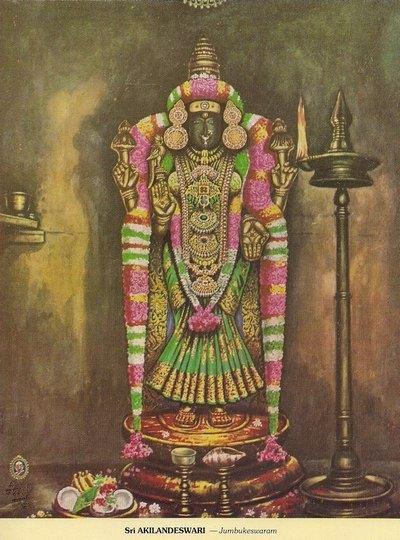
    Jambukeswarar Temple – also known as Thiruvanaika and Jambukeswaram – is a famous Shiva temple in Tiruchirapalli district. This temple is also famous for the worship of Goddess Akilandeshwari Amman. It is believed that Godess Parvati during her penance here to marry Lord Shiva, established this Shiva Lingam. Thiruvanaika is one of the Pancha Bhootha Stalam (Five great natural elements) representing water. There is a freshwater spring underneath the sanctum of Jambukeswara, which has a perennial flow.

    Legend says that, there were two Siva Ganas (Siva's disciples who live in Kailash) 'Malyavan' and 'Pushpadanta'. They always quarrel with each other and fight for the rank among Siva Ganas. In one fight 'Malyavan' cursed 'Pushpadanta' to become an elephant on earth and the 'Pushpadanta' cursed the 'Malyavan' to become a spider on earth. The elephant and the spider came to this place and continued their Siva worship. The elephant collected water from river Cauvery and conducted abishegam to the lingam under the Jambu tree (Naaval in tamil) daily. The spider constructed his web over the lingam to prevent dry leaves from dropping on it and prevent sunlight directly falling on it. When the elephant saw the web and thought it was dust on lingam. The elephant tore them and cleaned the lingam by pouring water and the practice continued daily. The spider became angry one day and crawled into the trunk of the elephant and bit the elephant to death, killing itself. Siva, in the form of Jambukeswara, moved by the deep devotion of the two, relieved them from the curse. As an elephant worshipped Siva here, this place came to be known as Thiru Aanai Kaa (thiru means holy, aanai is elephant, kaa means forest). Later the name 'Thiruaanaikaa' become 'Thiruvanaikaval' and 'Thiruvanaikoil'.

    As killing the elephant is a sin, the spider was born as the King Kochengat Chola (red-eyed king) in the next birth and built 70 temples. Thiruvanaikaval is one among them. Remembering his enmity with the elephant in his previous birth, Kochengat Chola built all these 70 temples as Mada Koil (Temple with steps) and built sanctums with small entrances as if no elephant can enter. The entrance on the sanctum of Jambukeswara is only 4 foot high and 2.5 foot wide.

    The main sannidhi of Jambukeshwarar is situated below ground level and you have to descend three steps from the sannidi entrance. Lord Jambugeshwarar can be viewed only through a stone window that has nine openings, which represents the nine outlets of human body. Entrance into the sannidhi is through a small door about 4 feet in height. Devotees are admitted in groups of five to six into the sannidhi. The lingam of Jambukeswarar is said to be Swayambu. The height of the lingam is about 3 feet from the floor of the sanctum. A water spring emerges from the lingam, which we can see by the wetness of the vastrams adorning the Shiva Lingam. The water flow increases significantly during the rainy season. The only source of illumination within the sannidhi are the ghee lamps, which gives the devotees a divine glow of the Shiva Lingam.

    The sannadhi of the Akilandeshwari and the sannadhi of Prasanna Vinayaka are in the shape of the pranava manthra symbol "Om". Like in Kanchipuram, Saint Adi Shankara pacified the anger of the Goddess here too. But instead of establishing Sri Chakra, he installed a pair of Sri Chakra thadangas (ear rings with the power of Sri Chakra) to pacify angry Goddess Akilandeswari. To ensure that she remains in a Sowmya Shantha Swaroopam (merciful form), Adi Shankara installed shrines of her sons Ganesha and Murugan in front of her, as a mother she cannot afford to be angry towards her kids.

    As Akilandeswari worshipped Lord Shiva in this temple, even today at noon the Archakar (temple priest) dresses in a female attire and does Pooja to Jambukeswarar and a Gho pooja to black colored cow. This uchi kaala pooja is very famous and a lot of devotees come to worship during this time every day. Annabhishekam to lingam (covering the lingam with cooked rice) is a daily ritual performed in the temple.

  • Thiruvalangadu Vadaaranyeswarar Temple

    There are 5 temples known as Pancha Sabhas, where Lord Shiva did the cosmic dance. Thiruvalangadu Vadaaranyeswarar temple is one of them which is called Rathna Sabhai. This temple is situated in Thiruvalangadu which is a small town in between Arakkonam and Thiruvallur districts. Vadaaranyeswarar Temple is one among the Padal Petra Sthalams in Thondai Mandalam (Northern Tamilnadu) which is mentioned as Thiruppazhayanur in Tevaram.

    Through the evidences of inscriptions, Sri Vadaaranyeswarar Temple dates back to 5th century. Later in 12th century this temple is enovated and extended by the Cholas. Main deity of this temple Lord Shiva is called Vadaaranyeswarar (God of northern forest) or Alavananathar (God who lives in banyan forest). Parvathi Devi in this temple is called Vandarkuzhali or Alavana Nayaki. Banyan tree is the shala vriksha of this temple.

    Legend says that, two demons Sumba and Nisumba chose this banyan jungle for their stay and began harassing the Devas. Devas appealed to Mother Parvathi for protection. Mother Parvathi appeared as furious Kali and destroyed the demons. Kali consumed the blood of the demons and their army and grew more furious. At the request of Sage Munjikesa Karkodaka, Lord Shiva reached the place. Kali challenged the Lord for a dance and said that she would give her right in the place to the Lord if he won. The dance began. Lord dropped his ear ring on the ground, picked it by the toe of his left leg and fixed it back on his ear in the dance. Kali accepted her defeat and said that she could not do such a marvellous dance. Lord Shiva said that he alone was equal to her and said further that those coming to worship him in this temple should worship her first to reap the full benefit of the worship. Since then, Kali has her own temple to grace the devotees.

    It is in this temple that Lord Shiva addressed the Great Saint devotee Karaikkal Ammaiyar as "Ammaye". Ammaiyar reached this temple by head as she thought walking by feet to Lord’s shrine was a sin. Ammaiyar even enjoyed the dance performance of the Lord standing upside down. She reached the state of bliss here.

    This is a very important temple for classical dancers as they worship here to master the art. Margazhi Thiruvadhirai (in the month of December-January) is the most important festival of this temple.

  • Thiruindaloor Parimala Ranganathar Temple

    Parimala Ranganathar Perumal Temple or Tiruindaloor is dedicated to Lord Vishnu, located in Thiruvilandur of Mayiladuthurai district. It is one of the Divya Desams, the 108 holy temples of Vishnu revered in Nalayira Divya Prabandham by the Alwars (the 12 poet saints). This temple is in the banks of river Kaveri and is one of the Pancharanga Kshetrams and is called as Andya Rangam (Last Arangam). Srirangam is the first Rangam.

    It is believed that River Kaveri is given the holy status of Ganga in this Kshethram. She is being taken by God as bed in Srirangam, as mother in Thirusheri and above his head in this Parimala Ranganathar temple, like River Ganga occupies the head of Lord Shiva. Parimala Ranganathar is believed to have appeared for Chandra, the moon god. This is how the place got the name Thiruindaloor (Indu Means Moon). This place is where moon god Chandra is believed to have been relieved of his curse. Chandra worshiped Vishnu who appeared to please the devotee.

    According to another legend, the azhwar saint Thirumangai Azhwar visited the temple and the doors were locked at the time. Lord Parimala Rangan Shut the door on Azhwar reasoning that he was late. Upset at this Azhwar argues vehemently with Lord. Still Parimala Ranganathar refused to open the door. Frustrated and dejected by this, Azhwar decided to leave the place saying “வாசி வல்லீர் இந்தளூரீர் வாழ்ந்தே போம்நீரே”, meaning “I am leaving. You live yourself here and enjoy life”. After this heated argument Lord Parimala Rangan praised and persuaded Thirumangai Azhwar to sing. After hearing the beautiful Tamil of Azhwar, Lord opened the door and gave Darshan. 10 Pasurams were sung by Thirumangai Azhwar on Parimala Rangan.

    Thayar of this temple is called Parimala Ranganayaki. The temple follows Pancharatra Agama and thenkalai tradition. The major festival celebrated in the Parimala Ranganathar Temple is the Chithrai festival, celebrated during the Tamil month of Chittirai (April-May). The other festivals in the temple include the 10-day Aaandal Aadi festival celebrated during July-August, Thayar Navaratri Utsavam during the Tamil month of Purattasi (September – October). Like many temples in the Kaveri Delta region, Kadaimuka Snanam or Mudavan Muzhukku is also celebrated in this temple during the tamil month Aippasi, when the river Kaveri joins the sea. Thousands of people will gather on that day to take holy bath in the river.